Subantarctic fur seal rests for 11 hours on São Paulo beach after migration
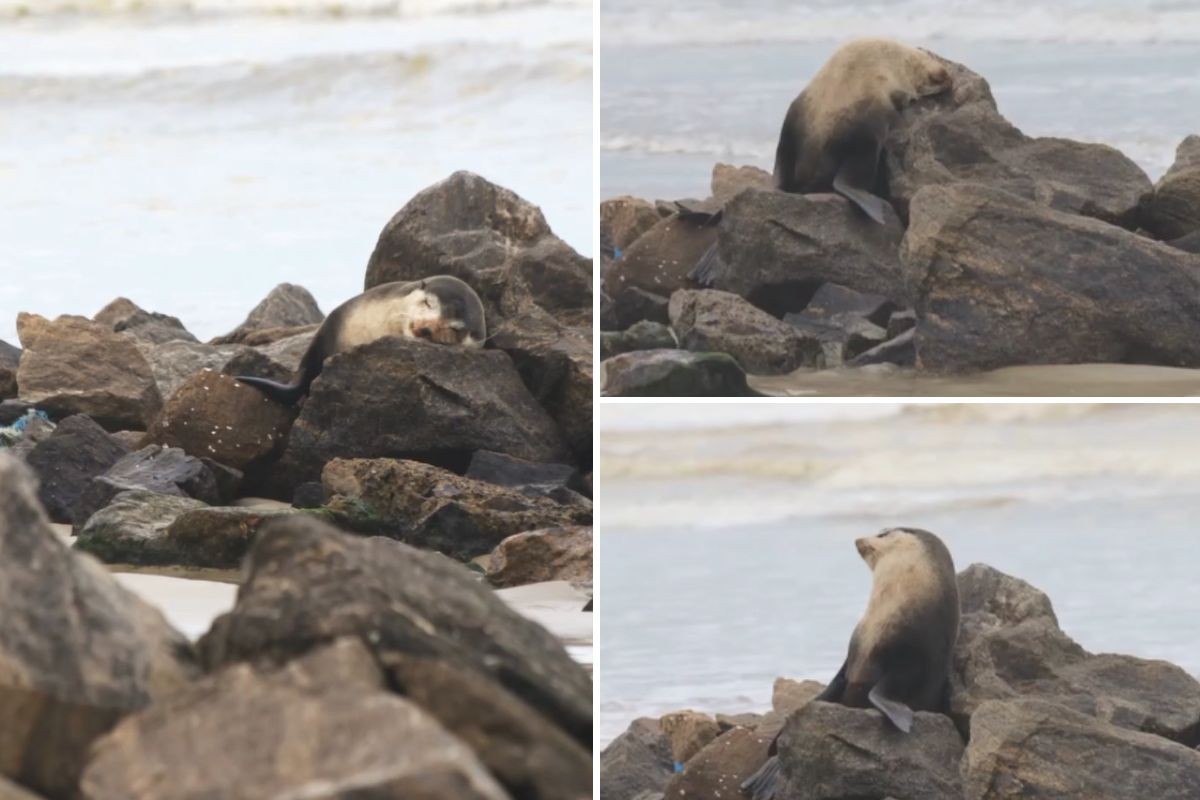
A subantarctic fur seal (Arctocephalus tropicalis) was observed resting on a beach in Mongaguá, São Paulo, for approximately 11 hours before returning to the sea on its own. The animal, identified as a subadult male, was discovered by a beachgoer on Wednesday, the 8th, in the Vera Cruz neighborhood. Images released by the Instituto Biopesca show the seal emerging from the water and resting on rocks. The institute's team secured the area to ensure the safety of both the animal and the public, monitoring the seal throughout its time on the beach. The Instituto Biopesca explained that this species typically inhabits the Antarctic continent and surrounding archipelagos, such as Prince Edward, South Georgia, South Sandwich, and South Shetland Islands. During winter months, these seals migrate from their colonies in search of food, which can lead them to appear along the Brazilian coast. Biologist Eric Comin described the fur seal as a semi-aquatic carnivorous mammal belonging to the Otariidae family, characterized by visible external ears and the ability to use its hind flippers for locomotion on land. Comin further noted that these animals visit the Brazilian coast temporarily, primarily during winter and spring, as they move from breeding colonies to find food and resting spots. He advised that if a fur seal is encountered, people should maintain a safe distance, as they are large, territorial animals that may bite if threatened, and authorities should be contacted.
The sighting of a subantarctic fur seal on a São Paulo beach highlights the extensive migratory patterns of marine wildlife and the ecological connectivity between Antarctic regions and South American coastlines. While the seal's presence appears to be a natural phenomenon related to foraging and resting during its migratory cycle, it underscores the importance of coastal monitoring and rapid response protocols by organizations like Instituto Biopesca. Future challenges may involve increased human-wildlife interactions as climate change potentially alters marine ecosystems and animal distribution, necessitating adaptive management strategies to balance conservation needs with public safety and coastal development.
AI-generated to prompt reflection — not editorial opinion, not advice, not a statement of fact. How this works.