Subhas Mukhopadhyay: The Poet of the People and His Enduring Relevance
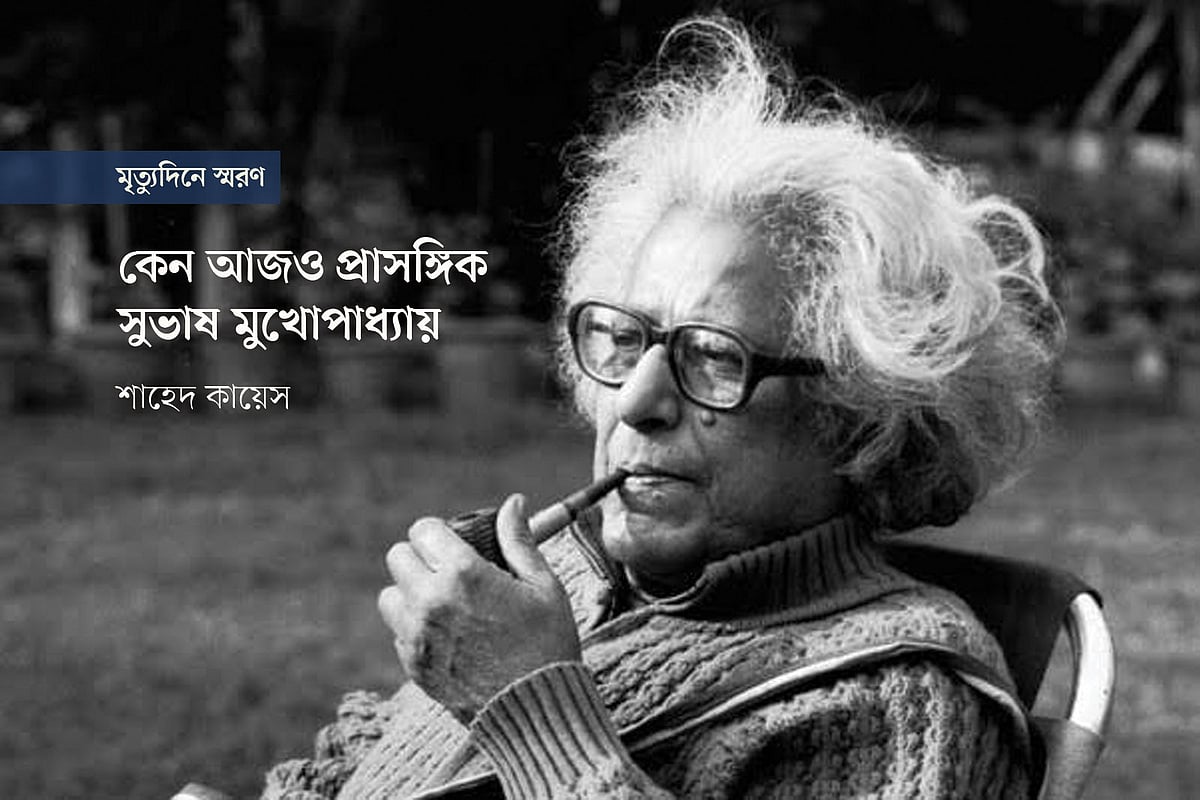
Subhas Mukhopadhyay (1919-2003) was a prominent Bengali poet whose work transcended aesthetic discussions to reflect the realities of time, society, politics, and human struggle. He is widely recognized as the 'poet of the masses,' whose verses captured the lives of laborers, love, nature, aging, death, and the harsh realities of his era. Mukhopadhyay played a crucial role in bringing poetry out of elite circles and connecting it with the lives of ordinary people, prioritizing authentic human emotion and accessible language over ornate artistry. His poetry is characterized by its blend of political protest, deep humanity, resilience, and introspection, with a core theme of rebellion against inequality in a class-divided society.
Born in Krishnanagar, Nadia, on February 12, 1919, Mukhopadhyay later moved to Kolkata. He earned an honors degree in Philosophy from Scottish Church College in 1941 but his formal education was cut short due to increasing involvement in political movements. He joined the leftist political movement and the Communist Party of India (CPI) in 1942. His literary career began amidst significant social and political upheaval, including World War II, the Bengal famine of 1943, the rise of fascism, and India's independence movement. His debut collection, 'Padatik' (1940), published at age 21, marked a new era in Bengali poetry by introducing a language of struggle, symbolizing his identity as a common soldier on the front lines rather than a commander.
Mukhopadhyay's Marxist-Leninist ideology deeply influenced his poetry, emphasizing the possibility of liberation for the common people through socialist revolution. His early works like 'Padatik' and 'Chirkut' (1946) expressed intense anger towards bourgeois society and profound empathy for laborers. He was not just a theoretical leftist but actively participated in movements of jute mill workers, tram workers, and farmers, internalizing their struggles. After the 1960s, political complexities and the fragmentation of the international communist movement impacted his ideological convictions, leading to a later distancing from some policies of the Left Front. Despite this disillusionment, he never lost faith in people and continued to advocate for the oppressed throughout his life. His poetry often intertwined themes of love with the suffering of the hungry, and he was a vocal opponent of fascism and nuclear warfare, as seen in poems addressing the aftermath of Hiroshima and Nagasaki.
Subhas Mukhopadhyay's life and work exemplify the powerful synergy between artistic expression and socio-political engagement. His deliberate choice to imbue poetry with the language and struggles of the working class, moving away from elitist traditions, highlights a critical function of art in fostering social consciousness and solidarity. The narrative of his evolving political perspective, particularly the disillusionment stemming from ideological shifts and political complexities, offers a case study in the challenges of maintaining unwavering commitment to ideals amidst systemic change. This evolution underscores the tension between personal conviction and the pragmatic realities of political movements, prompting reflection on how artists navigate such landscapes without compromising their core humanistic values or their commitment to advocating for the marginalized. His enduring relevance suggests a persistent societal need for voices that bridge the gap between aesthetic experience and the tangible realities of human existence and collective action.
AI-generated to prompt reflection — not editorial opinion, not advice, not a statement of fact. How this works.