Subsidence Threatens Farmland in Turkey and the US Due to Drought and Over-extraction
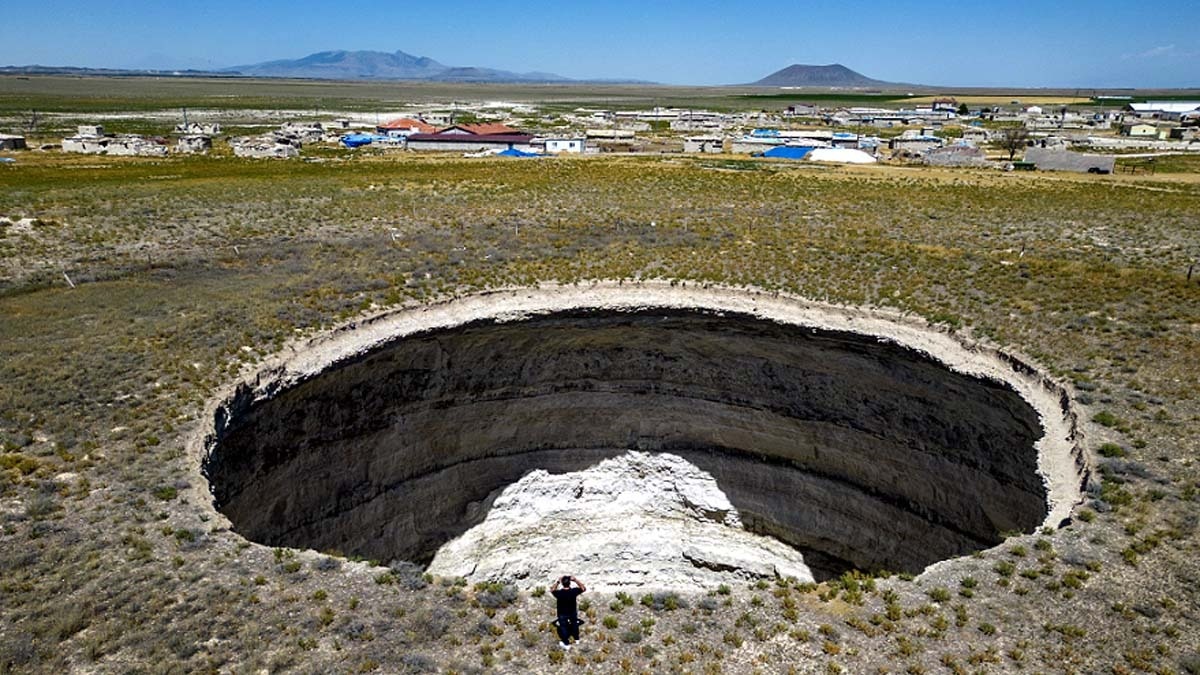
Increasing drought conditions and the indiscriminate use of groundwater for agriculture are weakening the land's surface, raising concerns about ground subsidence and the formation of large sinkholes in farmlands across multiple countries. This phenomenon is particularly evident in regions stretching from Turkey to the United States. The excessive withdrawal of groundwater is depleting aquifers, leading to a loss of underground support for the soil above. As the ground collapses, it creates significant depressions and potentially dangerous sinkholes, impacting agricultural productivity and infrastructure. The situation highlights the critical need for sustainable water management practices to mitigate the long-term environmental and economic consequences of current farming methods.
The observed ground subsidence in agricultural areas, exacerbated by drought and groundwater over-extraction, points to a critical intersection of climate change impacts and resource management failures. The depletion of subterranean water reserves creates voids that lead to surface collapse, a predictable consequence of unsustainable hydrological practices. This phenomenon underscores the systemic vulnerability of food production systems reliant on finite water resources, especially in arid and semi-arid regions. Future agricultural resilience will necessitate a paradigm shift towards water conservation, alternative irrigation technologies, and potentially revised land-use policies to prevent further degradation and ensure long-term food security in the face of evolving environmental pressures.
AI-generated to prompt reflection — not editorial opinion, not advice, not a statement of fact. How this works.