Sugar Molecule Discovered in Milky Way Could Hint at Life's Origins
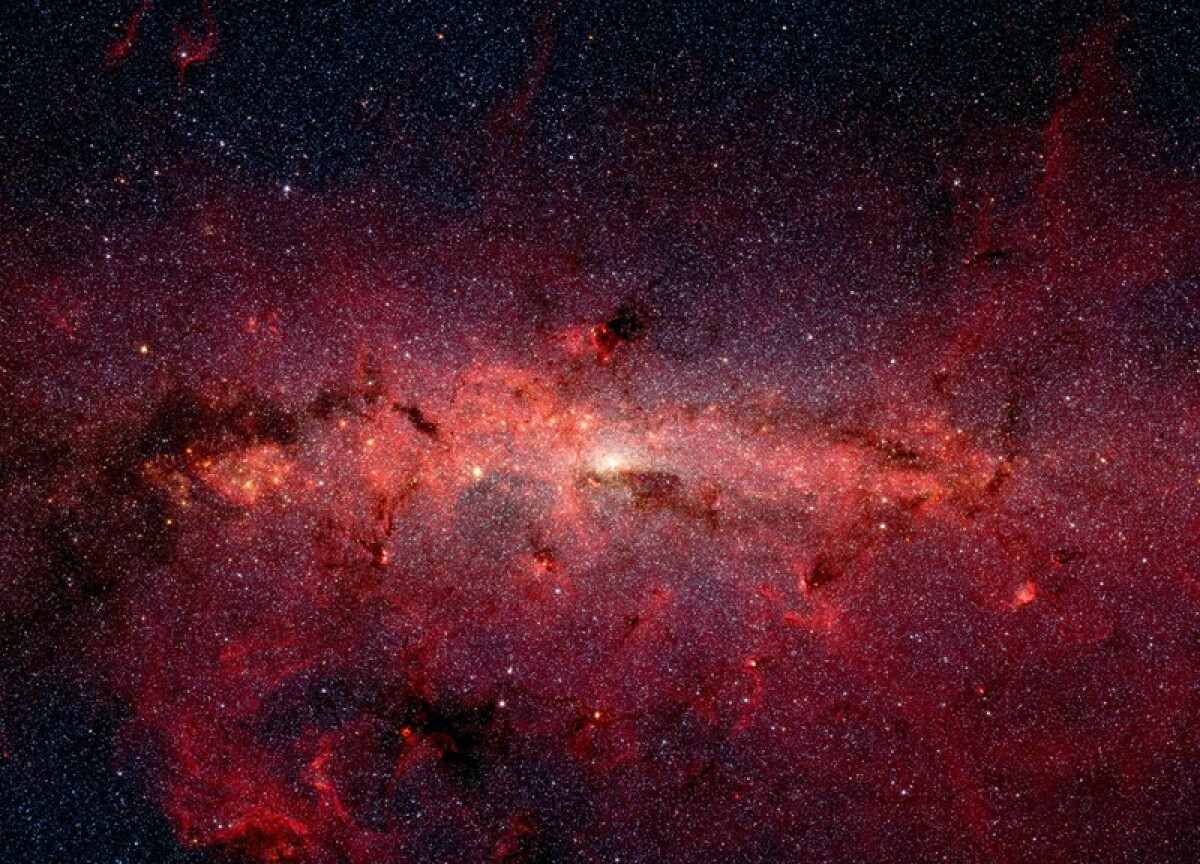
Astronomers have detected a sugar molecule, specifically erythrulose, within a nebula located near the center of the Milky Way galaxy. This discovery is significant because erythrulose is a type of sugar found on Earth, notably in raspberries. The presence of this complex organic molecule in such a location raises intriguing questions about the chemical precursors to life and their potential distribution throughout the cosmos. Researchers are exploring whether this finding could offer clues to understanding the fundamental building blocks of existence and how they might have formed or been transported to early Earth. The investigation into the nebula's composition and the sugar's origin is ongoing. This discovery adds to the growing body of evidence suggesting that the basic ingredients for life may be widespread in the universe. Further study is needed to determine the exact processes that led to the formation and presence of erythrulose in this distant nebula.
The detection of complex organic molecules like erythrulose in interstellar nebulae is a key observation in astrobiology. It supports the hypothesis that the raw materials for life are not unique to Earth but are potentially abundant throughout the galaxy and universe. This finding prompts further investigation into the chemical evolution of the cosmos and the processes that could lead to prebiotic chemistry in diverse environments. Understanding the conditions under which such molecules form and persist can inform our search for extraterrestrial life and our comprehension of life's origins on Earth, suggesting a potentially shared chemical heritage across celestial bodies.
AI-generated to prompt reflection — not editorial opinion, not advice, not a statement of fact. How this works.