Sun-like Star Found with Unusual Lithium Signature After Apparently Eating a Planet
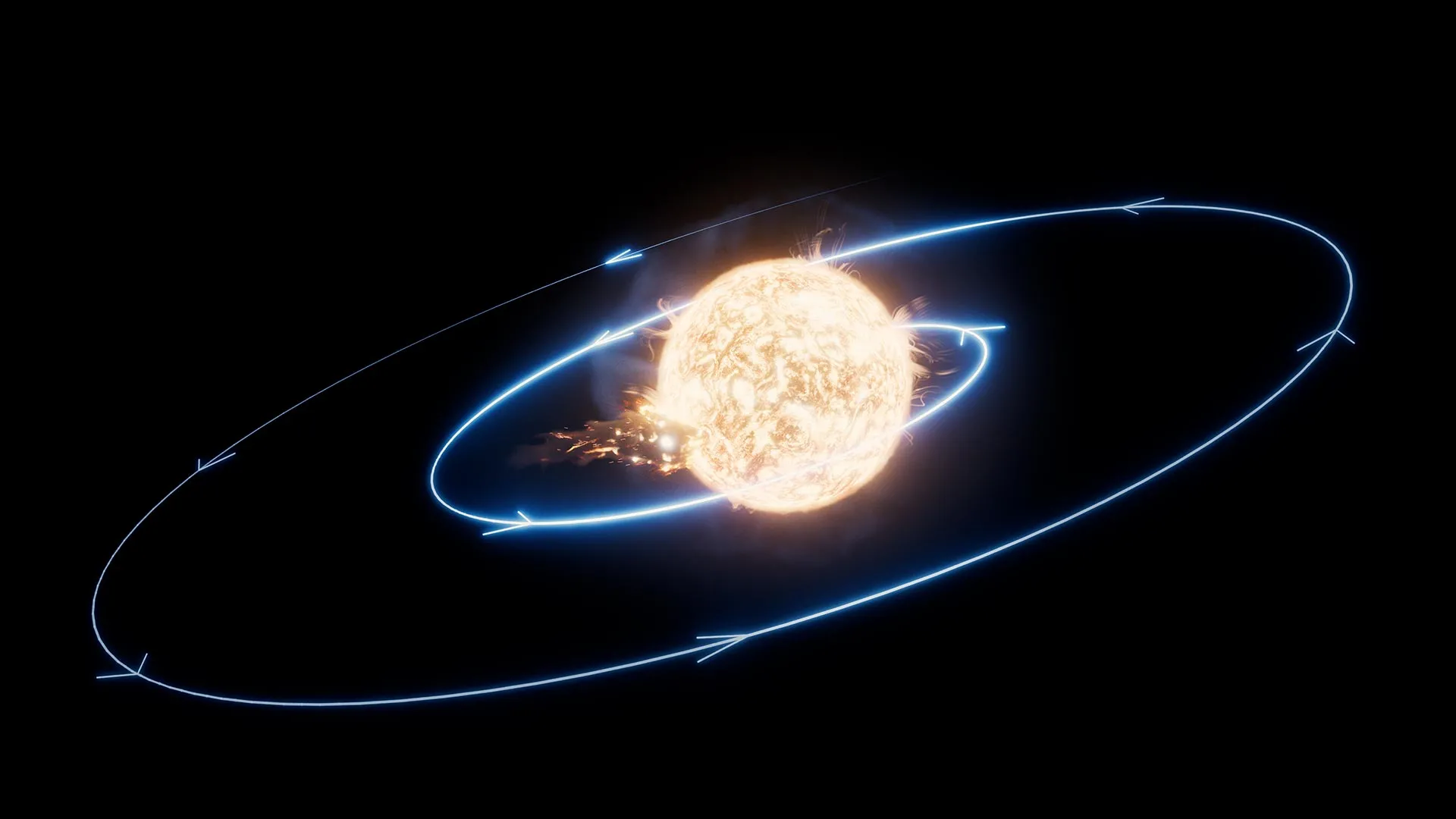
Astronomers have observed a Sun-like star exhibiting an exceptionally high concentration of lithium, a chemical anomaly strongly suggesting it consumed one of its own planets. This discovery was made by comparing the star to dozens of similar celestial bodies, which revealed its unique chemical composition. The presence of this lithium signature is considered a key indicator of planetary material being incorporated into the star. Scientists hypothesize that a large brown dwarf companion orbiting the star might have played a role in destabilizing the planet's orbit, ultimately causing it to fall into the star. This event provides a rare glimpse into the dynamic and sometimes destructive interactions that can occur within planetary systems.
This observation offers a rare empirical insight into stellar evolution and planetary system dynamics. The detection of an unusual lithium signature in the star provides compelling evidence for the consumption of a planet, illustrating the potential for significant mass transfer events. The proposed role of a brown dwarf companion highlights the complex gravitational interactions that can shape planetary orbits over cosmic timescales. Understanding these processes is crucial for refining models of planet formation and survival, particularly in the context of exoplanet research and the search for habitable worlds. The event underscores the dynamic nature of star-planet systems and the long-term consequences of gravitational perturbations.
AI-generated to prompt reflection — not editorial opinion, not advice, not a statement of fact. How this works.