Sungrow Unveils Solid-State Transformers for AI Data Centers, Boosting Efficiency
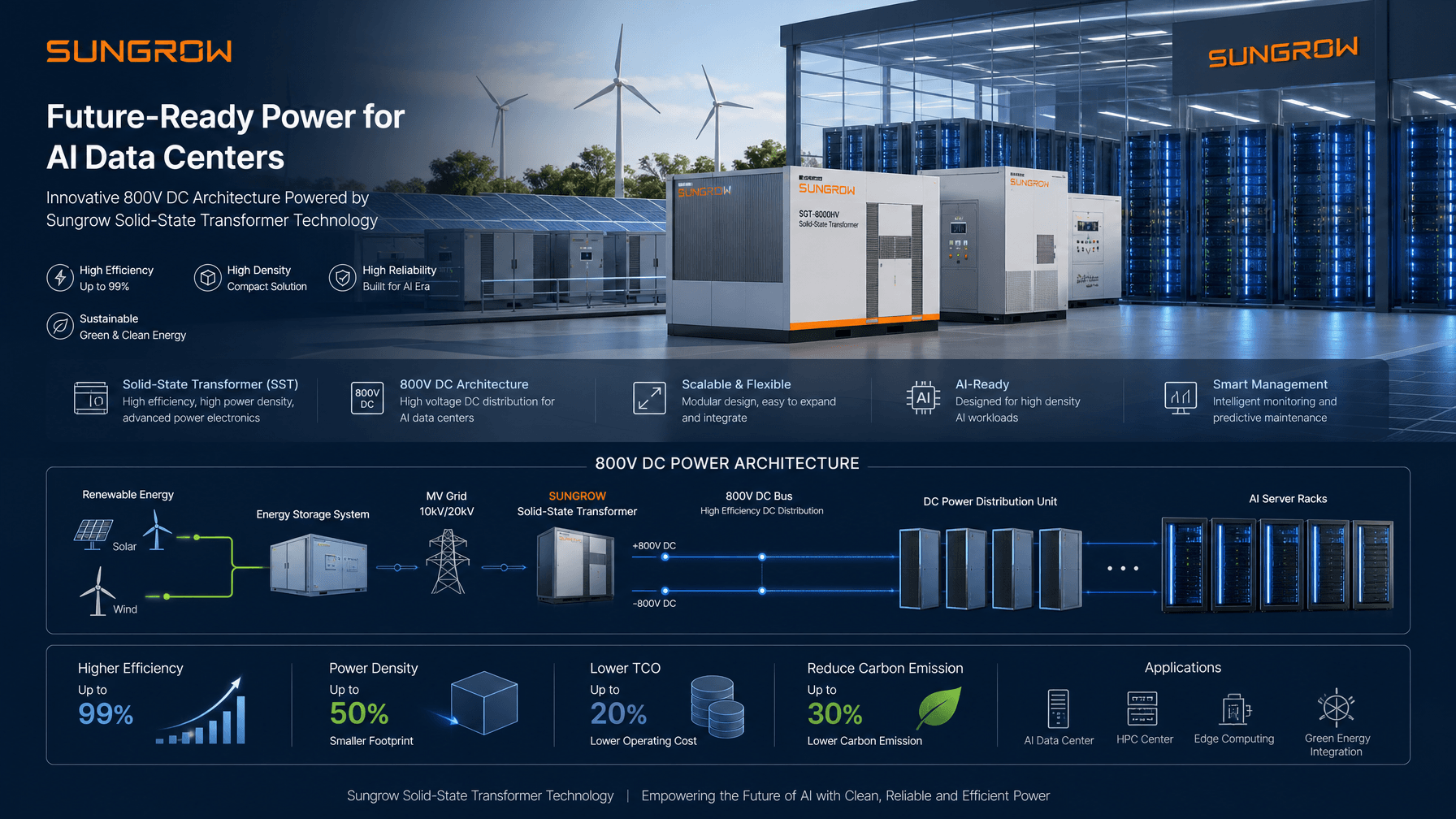
Sungrow has introduced commercial solid-state transformers specifically designed for AI data centers. These new transformers utilize an 800V DC architecture, a significant advancement in power distribution technology for these energy-intensive facilities. The adoption of this architecture is projected to reduce the physical footprint of power distribution systems by an impressive 50%. Furthermore, the solid-state transformers achieve a peak efficiency rate of 98.5%, minimizing energy loss during operation. This innovation addresses the escalating power demands of artificial intelligence infrastructure, offering a more compact and efficient solution. The move by Sungrow signals a growing trend towards higher voltage DC architectures in data centers to manage the substantial energy requirements driven by AI workloads. The development is poised to impact the design and operation of future AI data centers, emphasizing both space and energy savings.
AI's exponential growth necessitates a paradigm shift in data center infrastructure, particularly concerning power management. The introduction of 800V DC architecture and solid-state transformers by Sungrow addresses critical efficiency and spatial constraints. This technological evolution is driven by the fundamental economic and environmental pressures to reduce operational costs and carbon footprints associated with massive computational power. As AI workloads continue to scale, the industry faces a trade-off between the capital investment in advanced infrastructure and the long-term savings from enhanced energy efficiency and reduced physical footprint. This development highlights a systemic need for intelligent power solutions that can adapt to the dynamic demands of future computing paradigms, potentially influencing grid stability and energy policy as data centers become even larger energy consumers.
AI-generated to prompt reflection — not editorial opinion, not advice, not a statement of fact. How this works.