Sunlight's Journey: 8 Minutes to Earth, 170,000 Years Within the Sun
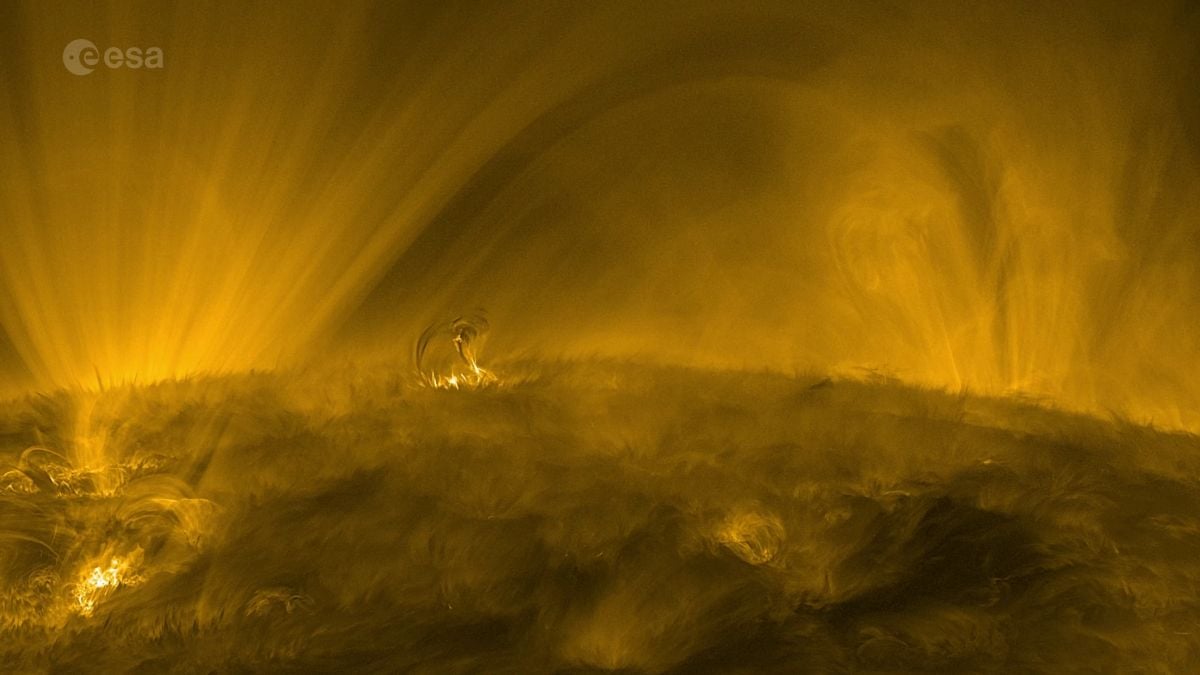
The light we perceive on Earth as sunlight has a remarkably long and complex journey. While it takes approximately 8 minutes and 20 seconds to travel the vast distance from the Sun to our planet, the photons that make up this light have spent an immense amount of time within the Sun itself. Before escaping the Sun's surface, these photons undergo a process of absorption and re-emission, bouncing randomly off plasma particles. This internal journey can take an astonishing 170,000 years. Only after this extended period does the light finally break free from the Sun's gravitational pull and begin its relatively swift voyage across space to Earth. This distinction highlights the dual nature of sunlight's travel: a brief transit to our world, preceded by an incredibly protracted period of existence within the star.
The description of sunlight's journey illustrates a profound contrast between the speed of light in a vacuum and the time it takes for photons to traverse the dense plasma of the Sun's interior. This phenomenon underscores the physical limitations imposed by the Sun's internal structure, where the constant scattering of photons significantly impedes their progress. Understanding this process is crucial for comprehending solar physics and the energy transport mechanisms within stars. It also serves as a reminder of the vast timescales involved in cosmic phenomena, prompting reflection on humanity's place within these grander cycles.
AI-generated to prompt reflection — not editorial opinion, not advice, not a statement of fact. How this works.