Super El Niño Forecast Sparks Amazon Drought Fears for Riverside Communities in Pará
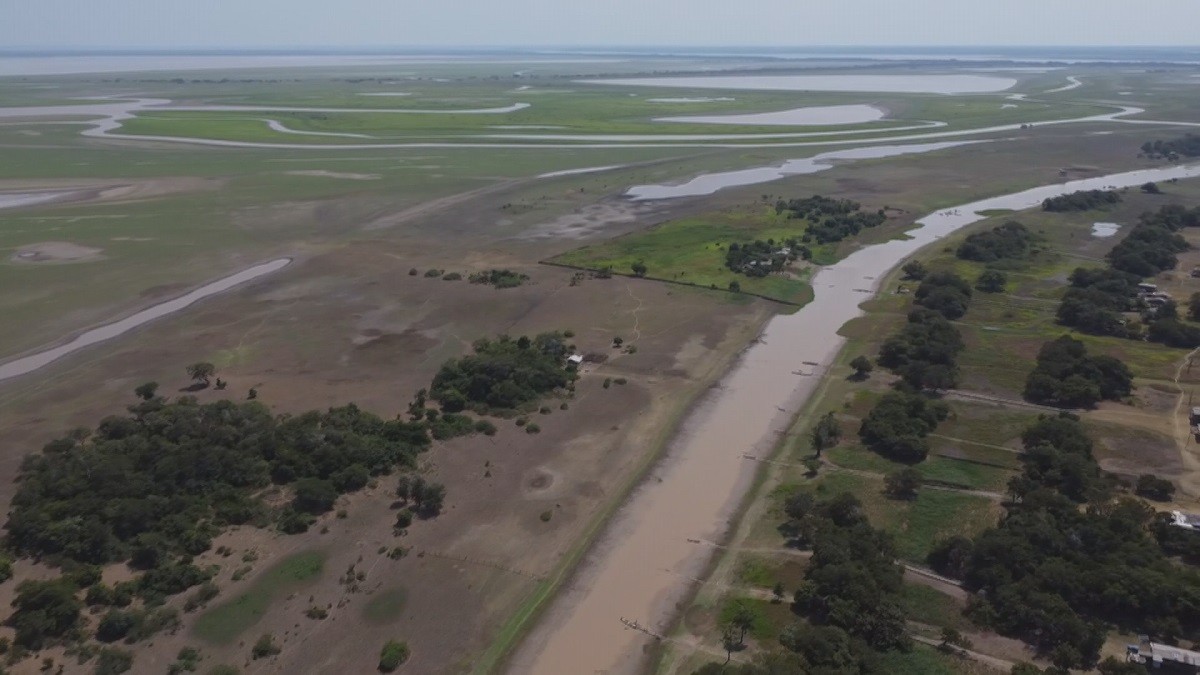
Residents and climate experts in western Pará, Brazil, are expressing concern over the potential for a "super El Niño" event in the second half of this year. The National Institute of Meteorology (Inmet) predicts a 90% probability of the phenomenon, which could lead to below-average rainfall in the Amazon region. This forecast raises fears of exacerbated drought impacts, including critically low river levels, potable water scarcity, community isolation, and an increased risk of forest fires. Indigenous communities, such as the Kumaruara territory along the Tapajós River, are already struggling with the lingering effects of severe droughts in 2023 and 2024, facing ongoing water supply issues. Zenilda Kumaruara, coordinator of the territory representing approximately 1,200 families across ten villages, highlighted that water supply from other communities is inconsistent, especially during the dry season. She also noted the significant reduction in water volume in local streams (igarapés), which are vital sources of drinking water, emphasizing the link between forest preservation and water availability. Climate science supports these concerns, with Inmet's bulletin indicating that El Niño's development in the Pacific Ocean is likely to reduce rainfall across much of the Amazon. Professor Lucas Vaz Peres from the Federal University of Western Pará (Ufopa) explained that El Niño results from abnormal warming of Pacific Ocean surface waters, disrupting global atmospheric circulation. He noted that while extreme events are natural, the increasing frequency of "super El Niños" is linked to climate change, posing risks of reduced precipitation in both the Amazon and northeastern Brazil. This impacts river levels, basic services for riverside populations, and wildfire risks. Traditional communities continue to prioritize forest preservation as a primary strategy against extreme climate impacts, with Zenilda Kumaruara stressing the critical importance of protecting rivers and forests for future generations and overall life quality. If confirmed, the "super El Niño" could lead to a scenario in western Pará similar to or worse than recent years, directly affecting water supply, navigation, agriculture, and the safety of riverside populations.
The forecast of a "super El Niño" highlights the Amazon's vulnerability to climate pattern shifts, particularly concerning water resources and ecosystem stability. The increased frequency of extreme El Niño events, as noted by researchers, suggests a potential acceleration of climate change impacts on regional precipitation and river systems. This situation presents a complex challenge for riverside and indigenous communities, whose livelihoods are intrinsically linked to water availability and forest health. Their reliance on natural water sources and traditional ecological knowledge underscores the systemic risks posed by altered weather patterns, potentially straining existing coping mechanisms and exacerbating socio-economic disparities. Future adaptation strategies may need to integrate both community-based conservation efforts and broader policy interventions addressing global climate drivers and their localized consequences.
AI-generated to prompt reflection — not editorial opinion, not advice, not a statement of fact. How this works.