Super Typhoon Bavi Approaches US Pacific Island Territory
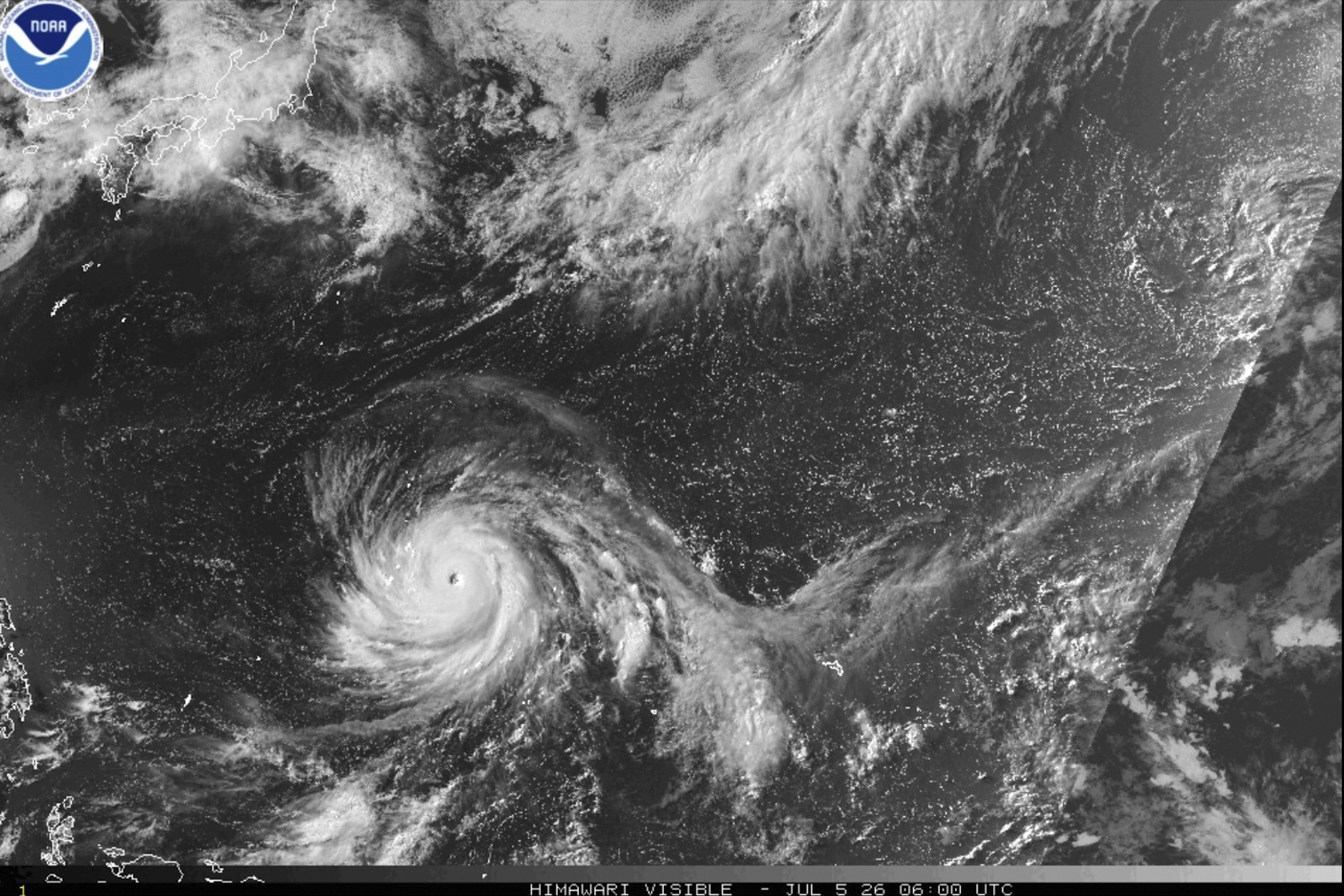
Satellite imagery from the National Oceanic and Atmospheric Administration (NOAA) depicts Super Typhoon Bavi nearing Guam, a U.S. island territory in the western Pacific Ocean, and heading towards the Northern Mariana Islands. The storm made landfall on Sunday evening, Brasília time (Monday morning local time), initially impacting Rota Island, where extreme wind warnings were issued. Forecasts predicted sustained winds of up to 290 km/h and gusts potentially reaching 346 km/h, classifying it as a Category 5 super typhoon. Typhoon alerts were also issued for Guam, Saipan, and Tinian. Authorities advised residents to stay indoors or in shelters, away from windows, due to the dangers of flying debris, falling poles, and power outages. Saipan International Airport recorded gusts exceeding 161 km/h. Some residents were still recovering from the impacts of Super Typhoon Sinlaku, which caused substantial damage in April. Despite Bavi's rapid movement, meteorologists warned of continued heavy rainfall and tropical storm conditions for the islands throughout Monday. Guam Governor Lou Leon Guerrero reiterated calls for residents to remain indoors until the cyclone passed.
Super Typhoon Bavi's approach highlights the increasing vulnerability of island territories like Guam and the Northern Mariana Islands to extreme weather events, a trend potentially exacerbated by climate change. The storm's Category 5 classification underscores the need for robust infrastructure and emergency preparedness plans that can withstand intense wind speeds and associated hazards like power outages and debris. The recurrence of major typhoons, with residents still recovering from Sinlaku, points to systemic challenges in disaster resilience and recovery cycles. Future planning must consider the frequency and intensity of such events, integrating advanced meteorological forecasting with long-term adaptation strategies to safeguard communities and critical infrastructure in the face of evolving environmental conditions.
AI-generated to prompt reflection — not editorial opinion, not advice, not a statement of fact. How this works.