Supreme Court Affirms Right to Peaceful Protest Amidst Police Action Concerns
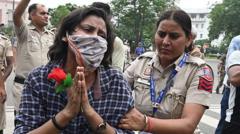
The Supreme Court of India has addressed concerns regarding the use of force by police against students protesting at Jantar Mantar. The court's remarks came in response to petitions filed in the wake of alleged police actions against the demonstrators. During the mention of these petitions, the Supreme Court raised questions about the conduct of security forces. The court emphasized that the right to peaceful protest is a fundamental entitlement that cannot be infringed upon by any entity. This statement underscores the judiciary's role in safeguarding civil liberties and ensuring that public demonstrations can be conducted without undue interference or excessive force from authorities. The legal proceedings aim to scrutinize the actions taken by law enforcement and uphold the constitutional rights of citizens to express their dissent peacefully.
The Supreme Court's intervention highlights a critical tension between maintaining public order and upholding citizens' fundamental right to peaceful assembly. By questioning security forces' actions, the court signals a commitment to ensuring that law enforcement's response to protests remains proportionate and respectful of civil liberties. This stance is particularly relevant in the current era, where public discourse and dissent are increasingly channeled through public demonstrations, often amplified by digital platforms. The judiciary's role is to provide a crucial check on executive power, ensuring that the mechanisms for expressing dissent do not become unduly suppressed, thereby fostering a more robust democratic process. Future governance models will need to balance these competing interests more effectively to prevent erosion of trust and ensure the vitality of public spaces for expression.
AI-generated to prompt reflection — not editorial opinion, not advice, not a statement of fact. How this works.