Supreme Court Overturns Convictions in Tragic Baldia Factory Fire Case
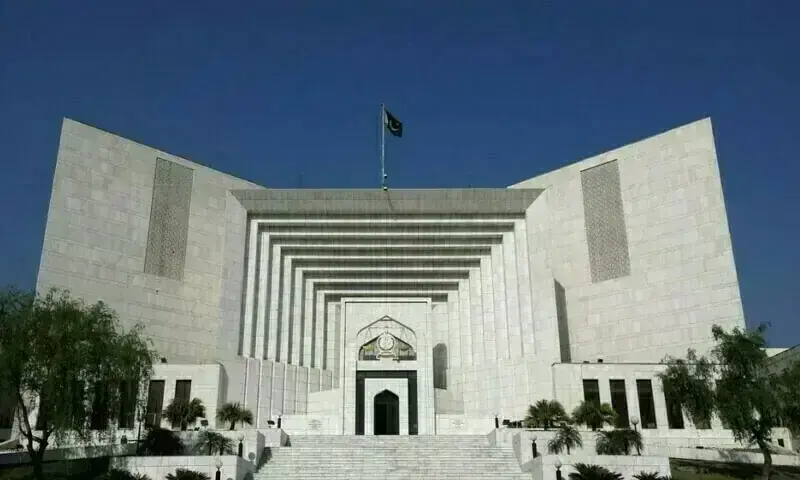
The Supreme Court of Pakistan has overturned the convictions of two Muttahida Qaumi Movement (MQM) workers, Abdul Rehman and Zubair, who were sentenced to death for their alleged involvement in the 2012 Baldia Town factory fire. This devastating incident resulted in the deaths of 260 workers and injured approximately 60 others. A detailed 39-page judgment, authored by Justice Malik Shahzad Ahmad Khan, highlighted that the prosecution failed to prove its case beyond a reasonable doubt.
The court emphasized the state's fundamental duty to protect life and enforce safety regulations, calling for prompt, scientific, and impartial investigations to identify those truly responsible for the tragedy. Initially, the First Information Report (FIR) focused on the factory owners for inadequate safety measures. However, the prosecution later shifted its narrative, alleging the MQM workers set the fire after the owners refused to pay Rs250 million in extortion money. The accused maintained they were scapegoated to target their political party.
The Supreme Court found critical weaknesses in the prosecution's evidence, including delayed introduction of the extortion allegations and reliance on testimony from witnesses who were initially accused themselves. The court noted that a key disclosure allegedly came from an individual not formally part of the Baldia case proceedings. Ultimately, the judgment concluded that the prosecution's case was riddled with serious doubts, leading to the acquittal of the accused and underscoring the principle that reasonable doubt warrants a verdict of not guilty.
The Supreme Court's ruling in the Baldia factory fire case underscores the critical importance of due process and the burden of proof in criminal justice. By overturning convictions due to insufficient evidence, the court reinforces the principle that state power must be exercised with rigorous adherence to legal standards, even when dealing with high-profile and emotionally charged tragedies. This decision highlights the potential for systemic failures, such as delayed investigations or the introduction of questionable evidence, to undermine justice. Moving forward, strengthening investigative protocols and ensuring the integrity of evidence from the outset will be crucial for building public trust and achieving accountability in future cases. The judgment also serves as a reminder that attributing guilt to entire political groups or communities based on the alleged actions of individuals requires concrete, verifiable proof, safeguarding against collective punishment and political targeting.
AI-generated to prompt reflection — not editorial opinion, not advice, not a statement of fact. How this works.