Supreme Court Questions English's Status in India's Three-Language Policy
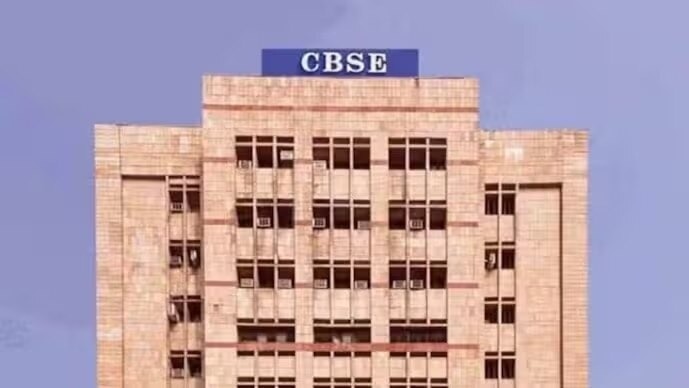
The Supreme Court of India has raised questions regarding the Central Board of Secondary Education's (CBSE) three-language policy, amidst ongoing confusion among students and parents. Despite the board issuing continuous circulars, the dilemma persists. During a hearing on the policy, the court posed a significant question: "Can English also be considered India's own language?" This judicial observation has sparked a new debate about the role and perception of English within the country's educational framework. The three-language policy itself has been a subject of contention, aiming to promote linguistic diversity while navigating the practicalities of language education in a multilingual nation. The court's inquiry suggests a potential re-evaluation of the foundational assumptions underpinning the policy's implementation and the place of English as a medium of instruction and a subject of study. This development could lead to further discussions on language education reforms and national identity.
The Supreme Court's inquiry into whether English qualifies as an "own language" within India's three-language policy highlights a critical tension between historical colonial influence and contemporary national identity in education. This question prompts a systems-level consideration of language policy, moving beyond mere implementation to examine the underlying rationale. It invites reflection on how educational frameworks, designed to foster unity and diversity, might inadvertently perpetuate linguistic hierarchies. The court's prompt encourages an analysis of the incentive structures that favor certain languages in academic and professional spheres, and how these might be re-aligned with India's rich linguistic heritage. This perspective shift is crucial for navigating the complexities of language in an increasingly globalized, yet locally diverse, future.
AI-generated to prompt reflection — not editorial opinion, not advice, not a statement of fact. How this works.