Supreme Court Reserves Decision on Bail Application Jurisdiction Dispute with FCC
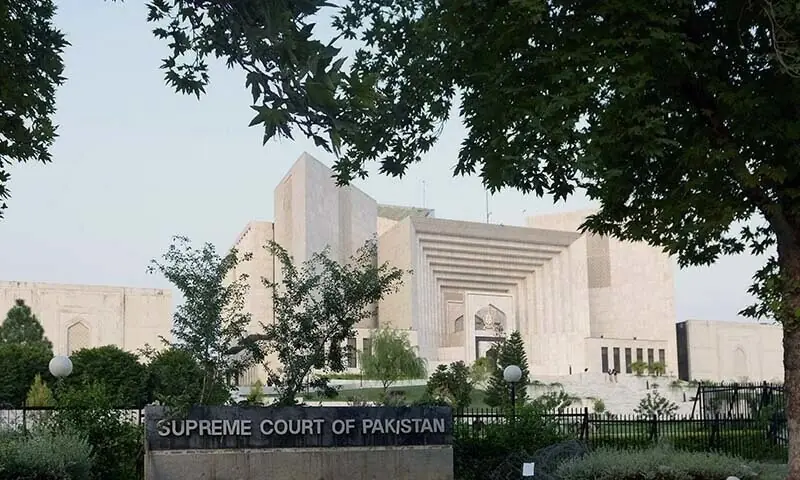
The Supreme Court of Pakistan has reserved its ruling on a significant jurisdictional dispute concerning its authority to hear bail applications in pending National Accountability Bureau (NAB) appeals. The core of the issue is whether these bail pleas should now be transferred to the newly established Federal Constitutional Court (FCC), as stipulated by the 27th Amendment to the Constitution. A three-judge bench, led by Justice Muhammad Ali Mazhar, indicated that a decision would be announced imminently.
The federal government's stance is that both appeals and bail applications in existing NAB cases now fall under the FCC's purview. However, senior counsel Ibadur Rehman Lodhi, representing an under-trial prisoner, argued that bail applications are governed by Section 497 of the Criminal Procedure Code, not Section 426, which pertains to convicted individuals. Lodhi contended that the SC retains jurisdiction for bail matters in pending cases under Section 32 of the NAB law, while Section 32-A, introduced on March 5, specifically designates the FCC for second appeals against convictions by high courts. He emphasized that the NAB Amendment Act uses the term 'appeal' and not 'bail,' suggesting the FCC's mandate is limited to appeals against final decisions, not interim bail requests.
During the hearing, Justice Mazhar questioned how the SC could retain authority in bail matters if the NAB law designates the FCC as the appellate forum, and asked for legal arguments supporting the SC's continued jurisdiction. Advocate Lodhi urged the court not to surrender its authority, asserting that bail applications, unlike final appeals, should remain with the SC. Attorney General for Pakistan Mansoor Usman Awan cited past instances where the SC handled bail matters by reviewing the entire case, such as in the bail case of Khawaja Saad Rafique.
This jurisdictional dispute highlights a potential conflict between legislative intent, constitutional amendments, and established judicial practice. The SC's deliberation centers on interpreting the scope of the 27th Amendment and its impact on the FCC's jurisdiction versus the SC's traditional role in hearing bail applications. The analysis of Section 32 versus Section 32-A of the NAB law, and the distinction between 'appeals' and 'bail applications,' will be critical. The court's decision could clarify the division of powers in handling corruption-related cases, potentially influencing the efficiency and accessibility of justice for individuals facing NAB charges. Future implications may involve how legislative changes are integrated into the existing judicial framework and the balance of authority between superior courts.
AI-generated to prompt reflection — not editorial opinion, not advice, not a statement of fact. How this works.