Surgeon-Controlled Humanoid Robots Perform Groundbreaking Surgery on Live Pigs
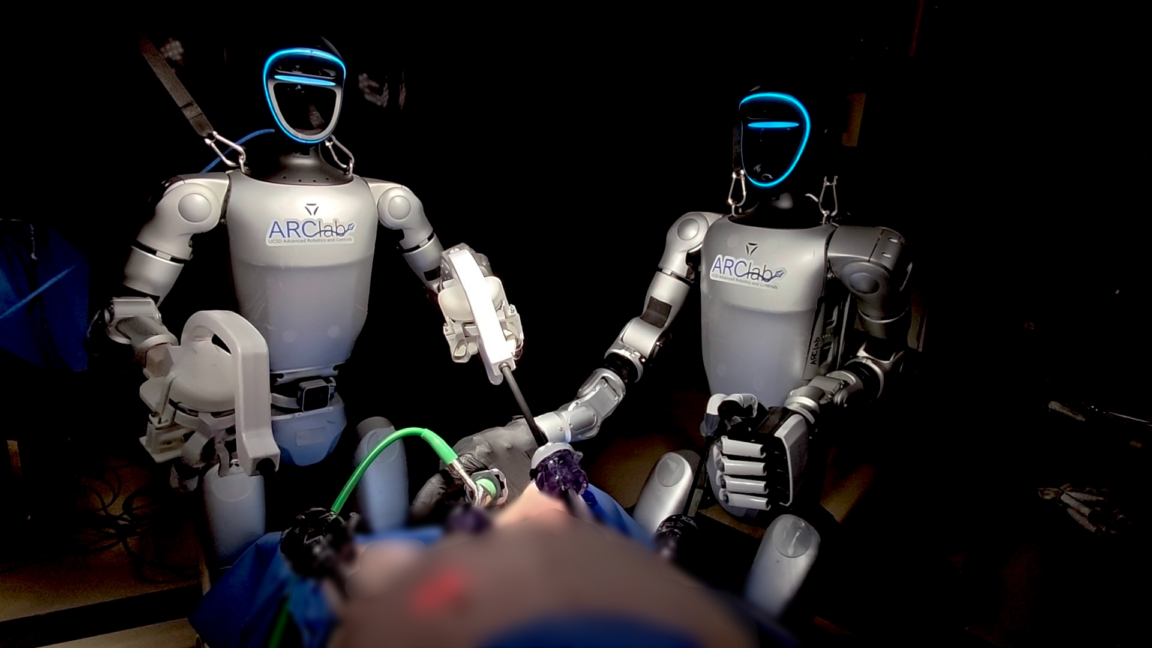
A preclinical trial has successfully demonstrated the world's first operation performed by humanoid robots under the direct control of human surgeons. The groundbreaking procedure took place on live pigs, marking a significant advancement in surgical robotics. This trial aims to test the feasibility and effectiveness of integrating advanced humanoid robotic systems into complex surgical environments. The technology allows surgeons to remotely manipulate robotic arms with high precision, potentially overcoming physical limitations and enhancing surgical capabilities. Researchers are evaluating the robots' performance in terms of accuracy, safety, and efficiency during the operation. This development could pave the way for new surgical techniques and improved patient outcomes in the future. The successful completion of this trial on pigs suggests a promising future for robotic assistance in human surgeries.
This preclinical trial represents a significant step in the evolution of surgical technology, exploring the potential of humanoid robots to augment surgeon capabilities. The integration of advanced robotics into live surgical procedures, even in animal models, highlights a trajectory towards increasingly automated and remote surgical interventions. Future developments will likely focus on refining control systems for greater dexterity, ensuring robust safety protocols, and navigating the complex regulatory pathways for human application. The long-term implications could involve democratizing access to specialized surgical expertise and enabling procedures in challenging environments, though ethical considerations and the cost-effectiveness of such advanced systems will remain critical factors for widespread adoption.
AI-generated to prompt reflection — not editorial opinion, not advice, not a statement of fact. How this works.