Swami Vivekananda Introduced Hinduism to America at 1893 Chicago World's Fair
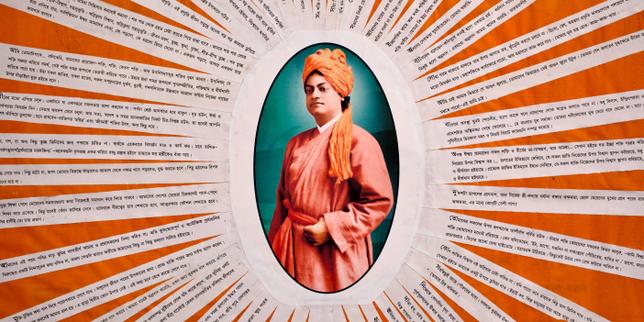
Swami Vivekananda, a Hindu monk, first introduced Hinduism to the United States during the 1893 World's Columbian Exposition in Chicago. He arrived in America with the stated intention of "spiritually helping" the New World. At a time when the West was perceived to be experiencing a spiritual deficit, Vivekananda advocated for a new role for India. He positioned India as a spiritual provider, aiming to offer the West an "additional soul" or spiritual enrichment. This event marked a significant moment in the cultural exchange between India and the United States, highlighting India's potential to contribute to the spiritual landscape of Western nations.
Swami Vivekananda's 1893 visit to Chicago represents an early instance of Eastern spiritual traditions seeking to engage with Western audiences, particularly in response to perceived societal spiritual voids. This historical event can be viewed through the lens of globalization and the exchange of cultural and philosophical ideas, which has intensified in subsequent decades. The dynamic of spiritual or philosophical seeking in the West, and the potential for Eastern traditions to fill perceived gaps, remains a relevant theme in contemporary discussions about well-being and meaning-making in an increasingly secularized and technologically driven world. Understanding these historical exchanges provides context for current cross-cultural spiritual movements and the evolving landscape of global belief systems.
AI-generated to prompt reflection — not editorial opinion, not advice, not a statement of fact. How this works.
