Synthetic Nanoassemblies Disrupt Cellular Balance, Research Explores Restoration
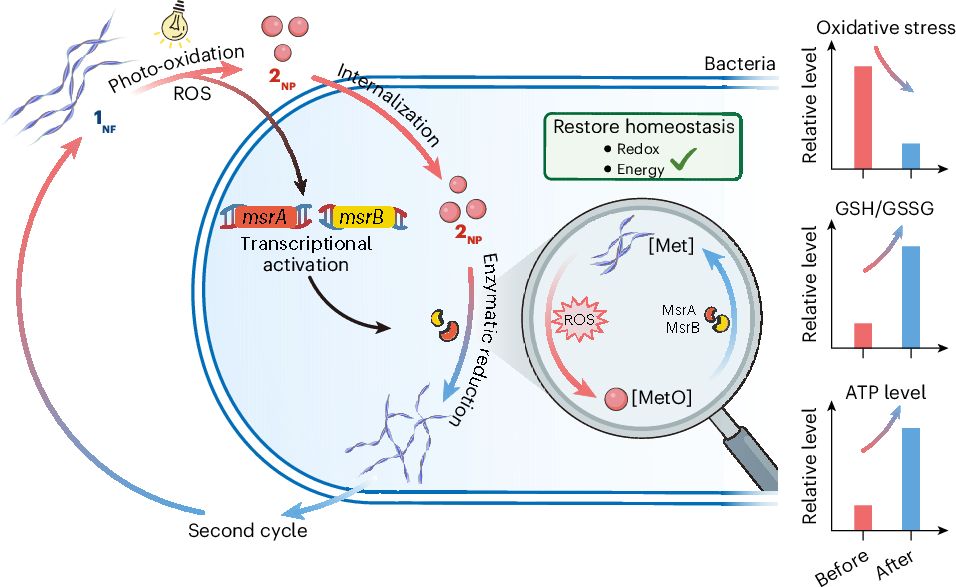
Researchers are investigating methods to restore intracellular homeostasis, a critical cellular balance, which has been disrupted by synthetic nanoassemblies. These engineered structures, when introduced into cells, can interfere with normal cellular functions and lead to an imbalanced internal environment. The study focuses on understanding the mechanisms by which these nanoassemblies cause disruption and developing strategies to counteract their effects. Restoring homeostasis is vital for cell survival and proper tissue function. The research aims to identify specific molecular pathways that are affected by the nanoassemblies and to find ways to reverse this disruption. This work is essential for the safe development and application of nanotechnology in biological systems. Understanding these interactions is key to harnessing the potential benefits of nanoassemblies while mitigating potential risks to cellular health. The ultimate goal is to ensure that synthetic nanoassemblies can be used therapeutically or diagnostically without causing detrimental effects on the cellular level.
The development of synthetic nanoassemblies presents a dual-use challenge: their potential for therapeutic or diagnostic applications is counterbalanced by the risk of disrupting fundamental cellular processes like homeostasis. This research highlights the need for a robust understanding of the bio-nano interface, focusing on the unintended consequences of engineered materials within living systems. Future advancements in nanotechnology will likely require sophisticated predictive models and rigorous in vitro/in vivo testing to anticipate and mitigate such disruptions. The long-term challenge lies in designing nanoassemblies that are not only functional but also inherently biocompatible, ensuring that technological progress does not outpace biological safety and ethical considerations.
AI-generated to prompt reflection — not editorial opinion, not advice, not a statement of fact. How this works.