Tadej Pogačar's Intense Glare at Nicolas Prodhomme During Tour de France Stage
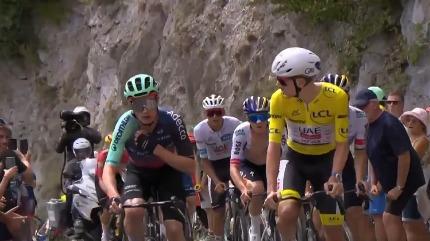
During a stage of the Tour de France, Slovenian cyclist Tadej Pogačar directed a stern look at Nicolas Prodhomme, a teammate of Paul Seixas. The incident occurred as Prodhomme had moved to the front of the group containing the race favorites, including Pogačar. The UCI WorldTour rider's intense gaze, captured on video in the Col de Sarenne, has sparked questions and commentary regarding rider dynamics and sportsmanship within the peloton. Pogačar, a prominent contender in the race, appeared to signal displeasure or a warning to Prodhomme. This moment highlights the high-pressure environment of professional cycling, where even subtle gestures can be interpreted as significant. The interaction raises discussions about respect between competitors and the unwritten rules of the road during intense racing moments. The specific context of Prodhomme's position relative to the favorites group is key to understanding the potential implications of Pogačar's reaction.
The intense gaze exchanged between Tadej Pogačar and Nicolas Prodhomme during the Tour de France stage, particularly in the challenging Col de Sarenne, underscores the psychological warfare inherent in elite cycling. Such interactions, while seemingly minor, can reflect underlying strategic tensions and the constant negotiation of space and advantage within the peloton. From a systemic perspective, these moments highlight the delicate balance between individual ambition and team objectives, as well as the unwritten codes of conduct that govern professional racing. In the context of the evolving AI era, where data analytics increasingly inform race strategy, the human element of rider psychology and interpersonal dynamics remains a critical, albeit less quantifiable, factor influencing outcomes. Understanding these micro-interactions provides insight into the complex social fabric of professional sports and the pressures faced by athletes at the pinnacle of their careers.
AI-generated to prompt reflection — not editorial opinion, not advice, not a statement of fact. How this works.