Taghi's childhood friend sentenced to over 13 years for 2014 murders
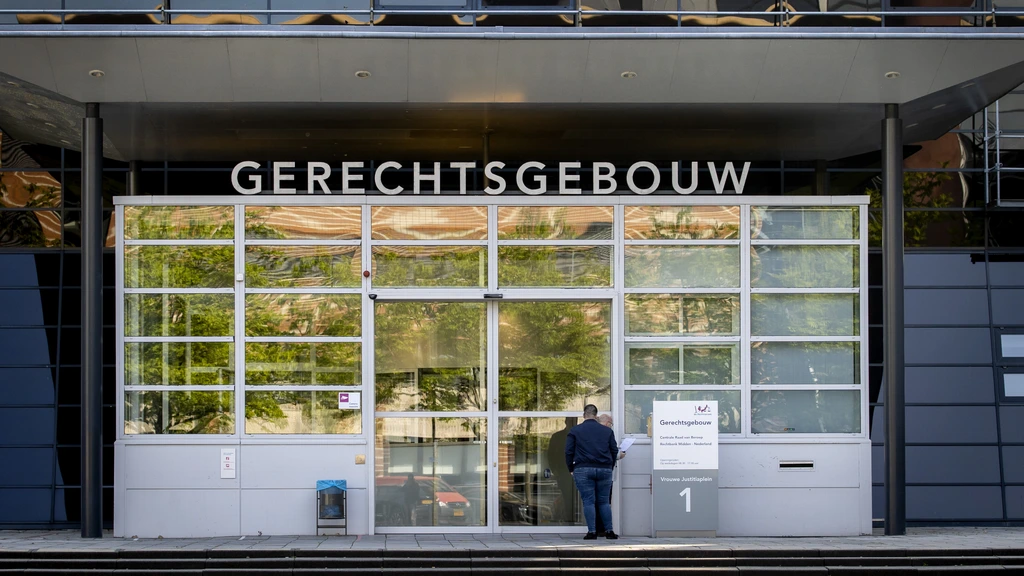
Jaouad W., a childhood friend of Ridouan Taghi, has been sentenced to 13 years and 8 months in prison by the Midden-Nederland District Court. He was convicted for his involvement in two assassinations that occurred in 2014: one in Steenbergen and another in Amersfoort. The Amersfoort murder on January 20 involved the shooting death of a 22-year-old man, for which W. conducted reconnaissance and surveillance in the days leading up to the event. His DNA was also found on the shell casings used in the shooting. In the Steenbergen assassination on April 14, a 68-year-old man was killed, and W. reportedly observed the victim and received location information via a device placed under the victim's car. The court stated that W. was part of a criminal organization that carried out assassinations on public roads using semi-automatic weapons. Although prosecutors sought a maximum sentence of 26 years and 8 months, W.'s prior 13-year sentence from 2019 for preparing assassinations, related to the "26Koper" mega-case, was deducted from the current sentence as per legal requirements. The Public Prosecution Service had requested a life sentence, alleging W.'s involvement in three additional murders in Houten and Amersfoort in 2011 and 2014. However, the court found insufficient evidence to directly link W. to these other killings. The "26Koper" case is considered a precursor to the Marengo trial, in which Ridouan Taghi received a life sentence, with his appeal still ongoing.
This sentencing highlights the intricate legal processes involved in prosecuting complex criminal organizations, particularly those linked to high-profile figures like Ridouan Taghi. The court's decision to deduct a prior sentence demonstrates the legal framework's intent to avoid double punishment while still acknowledging the severity of the current offenses. The discrepancy between the prosecution's request for a life sentence and the final verdict underscores the critical role of evidence sufficiency in judicial outcomes. Future legal strategies within such cases may focus on refining evidence collection and presentation to ensure convictions for all alleged offenses, navigating the challenges of proving direct involvement in organized crime across multiple incidents. The ongoing appeals in related cases suggest a protracted legal battle that will continue to shape the understanding of these criminal networks.
AI-generated to prompt reflection — not editorial opinion, not advice, not a statement of fact. How this works.