Taiwanese Logistics Firms Become 'Book Censors' Under Hong Kong National Security Law
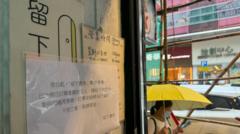
Hong Kong's National Security Law has significantly impacted the cross-border book supply chain, turning Taiwanese logistics companies into de facto "book censors." An owner of an independent bookstore in Hong Kong revealed to BBC Chinese that 70% of their inventory is imported from Taiwan. The refusal of logistics companies to transport certain books could severely disrupt their operations. This situation highlights the challenges faced by businesses operating under the new legal framework in Hong Kong, where the definition of prohibited content can be broad and subject to interpretation. The reliance on Taiwanese suppliers makes these logistics firms critical gatekeepers for a significant portion of the bookstore's stock. The implications extend beyond individual businesses, potentially affecting the diversity of literature available in Hong Kong and the freedom of expression for both readers and publishers.
The implementation of Hong Kong's National Security Law has introduced new complexities into cross-border trade, particularly for cultural goods like books. Logistics providers, by necessity, must navigate evolving legal restrictions, which can lead to a chilling effect on the free flow of information. This dynamic shifts the burden of content review onto private companies, potentially creating inconsistencies in enforcement based on corporate risk assessment rather than clear legal precedent. Over the next decade, the interplay between national security legislation and global commerce will likely necessitate clearer guidelines and international dialogue to ensure that legitimate trade and cultural exchange are not unduly stifled by broad interpretations of security concerns.
AI-generated to prompt reflection — not editorial opinion, not advice, not a statement of fact. How this works.
