Taubaté Cleans Storm Drains, Removing Tons of Debris
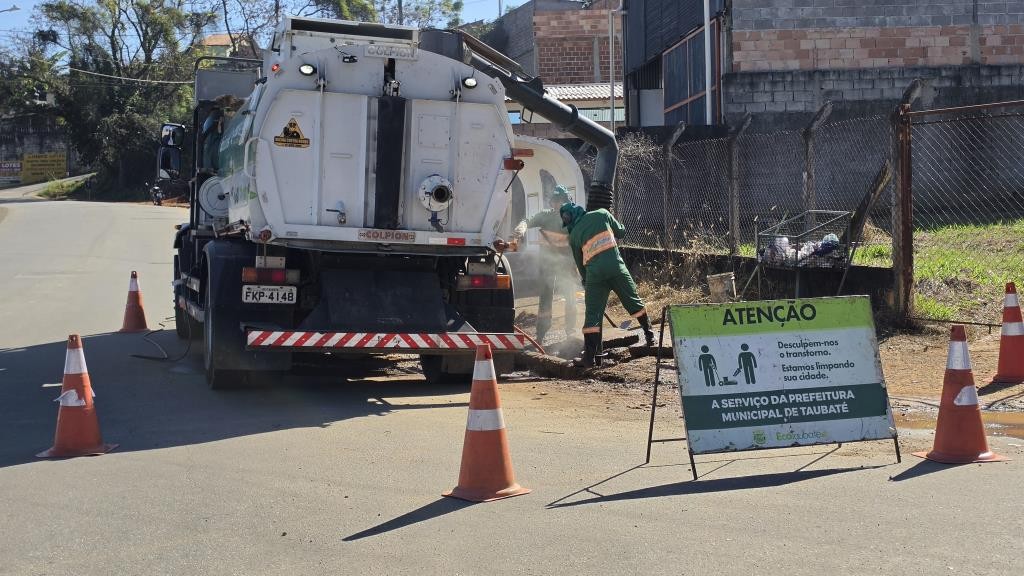
The Taubaté City Hall has intensified its storm drain cleaning efforts over recent months. In June alone, the municipality performed 2,673 desobstructions, removing a total of 13,120 kilograms of various waste materials. These operations covered 199 streets across several neighborhoods, including Vila Olímpia, Hércules Masson, Gurilândia, Imaculada, Vila Edmundo, Centro, Água Quente, Jaraguá, Jardim Maria Augusta, Parque Paduan, Jardim do Sol, Monte Belo, Campos Elíseos, São Gonçalo, Vila São José, Barranco, and Parque Aeroporto.
The reinforced cleaning initiative began in May, utilizing outsourced teams and a hydro-jetting truck. This equipment significantly accelerated the cleaning and desobstruction process, enabling more services to be completed daily. Technical staff from the Secretariat of Works oversee these operations, identifying critical areas and monitoring progress. Future work is planned for other city regions.
The expansion of these services was facilitated by an increase in the number of teams from the local concessionaire responsible for municipal maintenance. This enhancement was made possible by a municipal budget reorganization, which redirected funds from the Waste Collection Fee towards solid waste management. These redirected resources now cover household waste collection, the operation of voluntary drop-off points, debris collection, irregular dumping removal, and expanded services using specialized cranes. Consequently, the City Hall has reduced its reliance on general municipal budget funds for these activities.
The city of Taubaté's proactive approach to storm drain maintenance, involving intensified cleaning and the removal of significant waste volumes, addresses immediate urban infrastructure needs. The strategic reallocation of funds from the waste collection fee to solid waste management services, coupled with the use of outsourced teams and specialized equipment, demonstrates an effort to optimize resource allocation and improve operational efficiency. This financial maneuver allowed the municipality to reduce its dependence on general funds for essential services. Looking ahead, the sustainability of this model will depend on continued effective oversight of outsourced operations and the long-term impact of these investments on public health and urban resilience, particularly in the face of potential climate change-induced extreme weather events.
AI-generated to prompt reflection — not editorial opinion, not advice, not a statement of fact. How this works.