Taylor Swift's Wedding "Trash" Sells Online for Up to $100 Per Piece
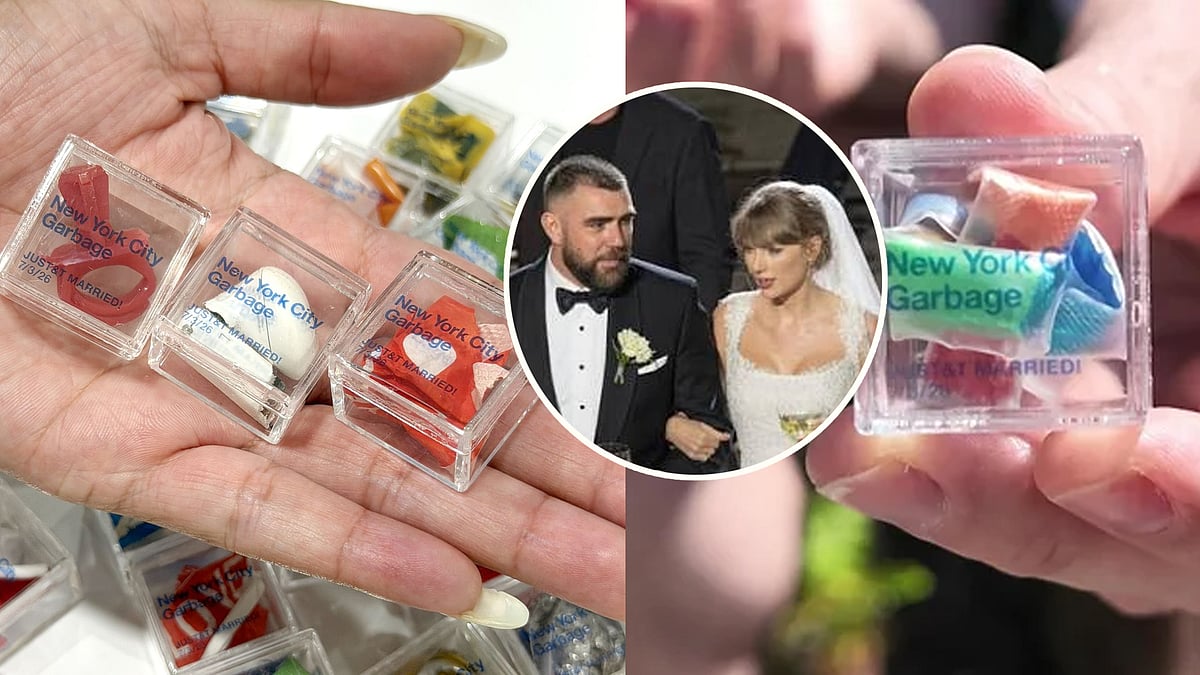
Fans of American pop star Taylor Swift are demonstrating their devotion in an unusual way, purchasing discarded items from her wedding to NFL player Travis Kelce. The wedding took place on July 3rd, and debris found outside the venue has become sought-after memorabilia. Swift's fans, known as "Swifties," are reportedly spending up to $100 USD for these collected items. The initiative was spearheaded by New York-based artist Justin Gignac, who gathered various objects left on the streets around Madison Square Garden after guests departed. He then sealed these items in small, transparent plastic cubes, marketing them as 'Pocket Garbage.' The smaller cubes are priced at $25 USD, while larger ones command $100 USD. Gignac reported finding items such as a Ring Pop, a lost AirPod, and even an ovulation test kit among the discarded materials. He ensures the sealed cubes are airtight to prevent odors and preserve the contents. Gignac views these collected items not just as merchandise but as art, a practice he has pursued for 25 years by preserving found New York City refuse in cubes. He stated that he finds beauty, joy, and wonder in discarded objects, which inspired his artistic concept. His website also features custom keepsakes, including preserved wedding mementos like vows, ring boxes, and table numbers for other couples. Gignac has offered to create a special cube for Taylor Swift and Travis Kelce as well. This phenomenon stands as perhaps the most surprising example of fan fervor surrounding Taylor Swift, where even wedding venue refuse can be transformed into collectible souvenirs.
This event highlights the powerful phenomenon of celebrity influence and the commodification of fan culture. The artist's initiative leverages the intense emotional connection fans have with celebrities, transforming discarded ephemera into high-value collectibles. This practice taps into a market where symbolic ownership and association with cultural icons are prioritized over the intrinsic value of the object itself. From a systems perspective, it underscores the evolving nature of value creation in the digital age, where narrative and perceived exclusivity can drive significant economic activity. The long-term implications may involve further blurring lines between art, commerce, and fandom, potentially setting precedents for how fan engagement and celebrity memorabilia are perceived and traded in the future. It also raises questions about waste, consumption, and the cultural significance we ascribe to objects tied to public figures.
AI-generated to prompt reflection — not editorial opinion, not advice, not a statement of fact. How this works.