Teacher Pay Talks Stall After 20,000 Educators Strike
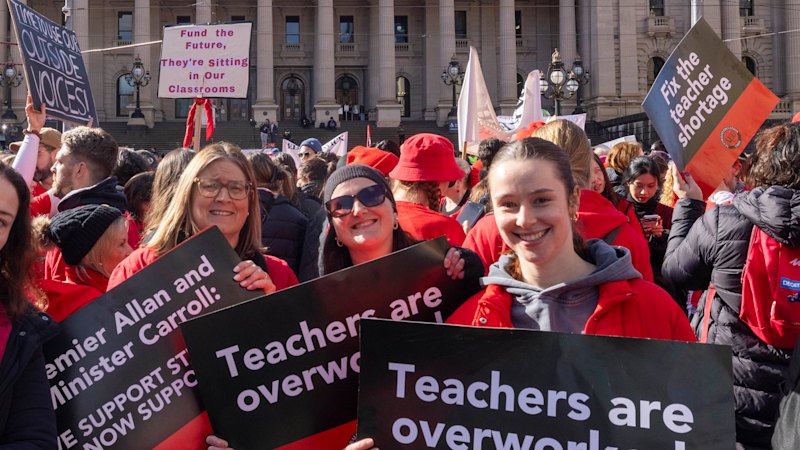
Negotiations between the government and the education union have reached a deadlock following a significant strike that saw approximately 20,000 teachers protest in the city. The strike action has led to a halt in further discussions, indicating that the dispute over teacher pay is likely to continue for an extended period. The union's mobilization of such a large number of educators underscores the depth of dissatisfaction within the profession regarding current compensation. This impasse suggests that neither party is currently willing to compromise, prolonging the uncertainty for teachers and the education system. The government's stance in these negotiations will be crucial in determining the resolution of this ongoing pay dispute. The union, emboldened by the turnout, may continue to exert pressure through further industrial action if a satisfactory agreement is not reached. This situation highlights the challenges in balancing public sector budgets with the need to adequately compensate essential workers like teachers.
The stalled negotiations in the teacher pay dispute, following a large-scale strike involving 20,000 educators, highlight a common tension between public sector fiscal management and the demand for competitive compensation in essential professions. The impasse suggests a divergence in perceived value and financial priorities between the government and the union. As artificial intelligence increasingly impacts the labor market and educational needs, the long-term sustainability of teacher compensation and the attractiveness of the profession become critical considerations for future workforce planning. Addressing these foundational issues proactively is essential to ensure a high-quality education system capable of adapting to evolving societal and technological landscapes.
AI-generated to prompt reflection — not editorial opinion, not advice, not a statement of fact. How this works.