Tech-Driven Initiatives Urged to Combat Human Trafficking in Teknaf
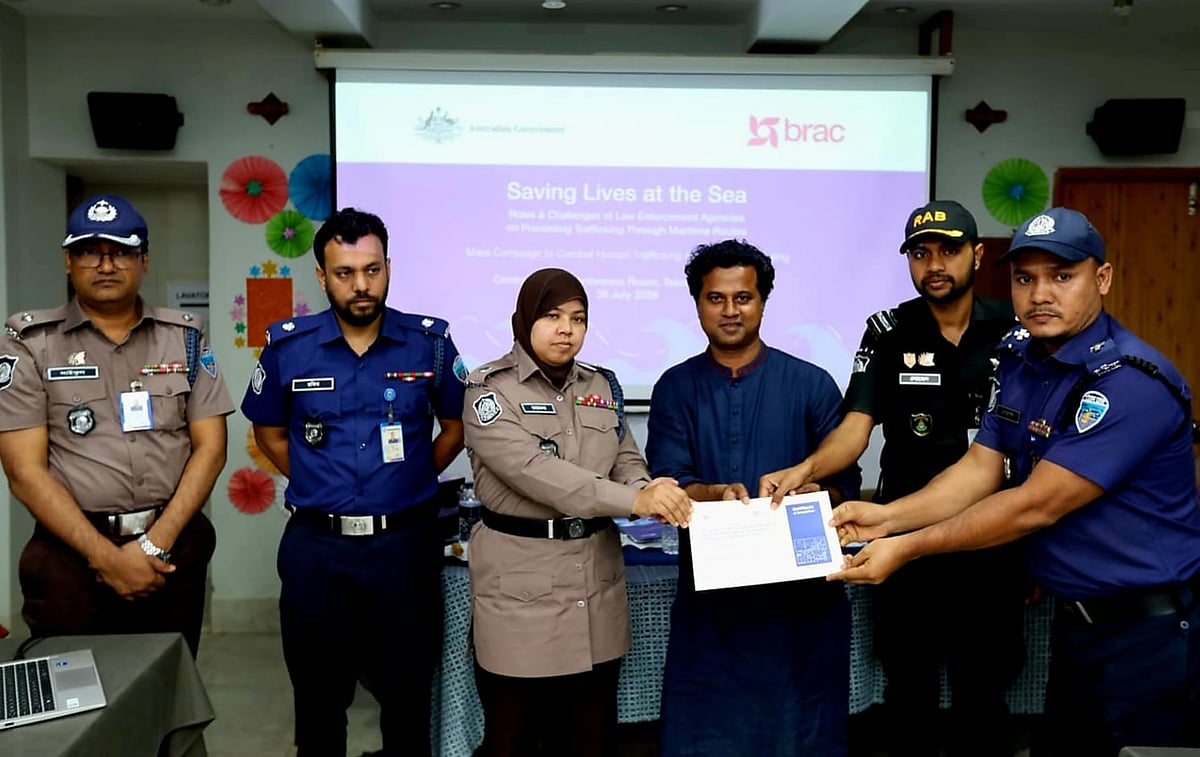
Experts and participants at a recent workshop in Teknaf, Cox's Bazar, emphasized the urgent need for technology-driven, coordinated efforts to prevent human trafficking and migrant smuggling via sea routes. They stressed that apprehending the masterminds behind organized criminal networks is crucial, alongside leveraging technology for integrated strategies. Media professionals and law enforcement agencies were called upon to play a more responsible and proactive role in this fight. The workshop, organized by BRAC's Migration Program with funding from the Australian government, brought together 42 journalists from Teknaf and Ukhia for a two-day session. A key objective was to enhance local journalists' capacity to report responsibly and accurately on human trafficking, migrant smuggling, and dangerous irregular migration by sea. Speakers highlighted the evolving nature of these crimes and the critical role of ethical journalism in raising public awareness and promoting safe migration. Discussions also covered the investigation of trafficking networks, their socio-economic impact, and the economic realities, noting that trafficking does not benefit the national economy but rather strengthens criminal groups and fuels illicit activities like drug smuggling. Law enforcement officials underscored the necessity of intelligence sharing, inter-agency coordination, victim identification, and robust legal action against trafficking syndicates. The Teknaf Model Police Station Officer-in-Charge identified Teknaf as a 'red zone' for human trafficking and migrant smuggling, advocating for intensified, technology-reliant strategies to counter organized crime in the region. Representatives from various law enforcement agencies, including police, RAB, BGB, APBN, and Ansar, participated in the discussions.
The workshop highlights a critical intersection of organized crime, irregular migration, and media responsibility in the Teknaf region. While technological solutions and inter-agency coordination are proposed, the underlying systemic drivers of human trafficking, such as economic disparities and demand for exploitative labor, require deeper examination. The emphasis on journalists' role underscores the power of information dissemination, but also raises questions about resource allocation and protection for those reporting from 'red zones.' Future strategies must consider how to address root causes of migration and exploitation, alongside enforcement, to create sustainable prevention. The long-term challenge involves fostering a comprehensive societal approach that moves beyond reactive measures to proactive prevention, ensuring that technological advancements serve to protect vulnerable populations rather than enable further exploitation.
AI-generated to prompt reflection — not editorial opinion, not advice, not a statement of fact. How this works.