Technology's Shine vs. Soil's Soul: The Evolving Story of Asar 15
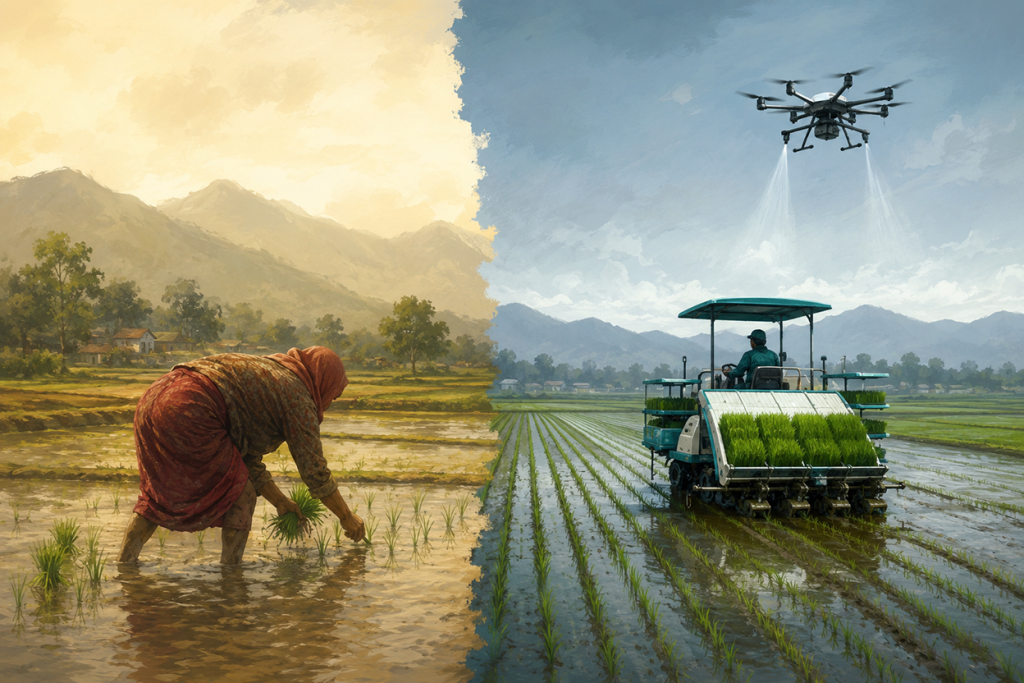
Recent advancements in agricultural technology, including drones and expensive machinery, have presented an image of prosperity in Nepal. However, a crucial question arises regarding whether these technologies can truly secure the future of the country's millions of small-scale farmers. The rapid adoption of modernity risks overshadowing the intrinsic biological essence of the soil and devaluing the labor of farmers. Addressing this imbalance and preserving the connection between farmers and the land is identified as a paramount necessity in the current era. The narrative surrounding Asar 15, a day traditionally celebrating rice plantation, is shifting as these technological interventions become more prevalent. While technology offers efficiency, the focus remains on ensuring it complements, rather than replaces, the fundamental aspects of traditional farming and the livelihoods of smallholders. The challenge lies in integrating innovation without eroding the ecological health of the soil and the socio-economic fabric of farming communities.
The increasing mechanization of agriculture in Nepal, driven by technologies like drones, presents a dual narrative of progress and potential displacement. While these tools promise enhanced productivity and efficiency, their widespread adoption raises concerns about the economic viability and future of smallholder farmers who form the backbone of the nation's food security. The analysis suggests a critical need to balance technological advancement with the preservation of soil health and the dignity of agricultural labor. Future policy considerations should focus on inclusive technological integration models that empower small farmers, ensuring that the pursuit of modernization does not inadvertently undermine the ecological sustainability and socio-economic resilience of the agricultural sector. This requires a strategic approach to technology adoption that prioritizes long-term stewardship over short-term gains.
AI-generated to prompt reflection — not editorial opinion, not advice, not a statement of fact. How this works.