Teenage 'Joan of Arc of the Contestado' Led Peasant Uprising in Early 20th Century Brazil
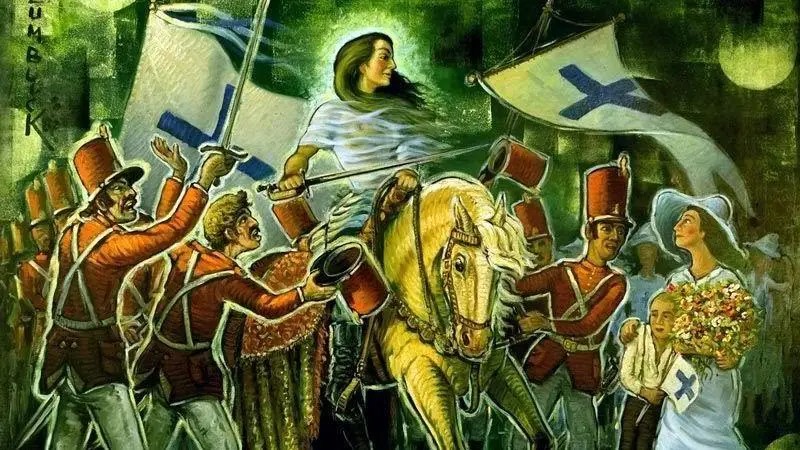
Maria Rosa, a teenage girl, emerged as a pivotal leader during the Guerra do Contestado, a major peasant revolt in Southern Brazil between 1912 and 1916. This conflict, initially framed as a border dispute between Paraná and Santa Catarina, was fundamentally driven by land dispossession, the expulsion of small farmers, and economic shifts caused by railway construction and logging. The revolt gained momentum around the religious leadership of monk José Maria, who advocated for a just society. Following his death in 1912, the movement, which had organized into communities known as 'redoubts,' was perceived as a threat by the newly formed Republic and faced military suppression.
Maria Rosa, reportedly around 15 years old and the granddaughter of a local leader, rose to prominence within the redoubt of Caraguatá, Santa Catarina, in 1914. She combined spiritual authority, claiming to receive divine messages from the deceased monk, with strategic military leadership. Described as the 'brain and soul' of the redoubt, she organized logistics, issued tactical orders, and maintained morale, with her decisions presented as divine guidance. Her leadership style, characterized by a warrior-like spirit and decisiveness, broke from traditional gender roles of the era, earning her the moniker 'Joan of Arc of the Sertão' due to her young age, divine claims, and military command.
The Guerra do Contestado resulted in an estimated 10,000 to 20,000 deaths and is recognized as a significant social conflict of Brazil's First Republic, highlighting land disputes, state responses to rural populations, and the impact of economic expansion. While the comparison to Joan of Arc helps contextualize Maria Rosa's impact, some scholars caution against oversimplifying her role by 'Europeanizing' a figure deeply rooted in Brazilian messianism. Her legacy, built through popular narratives and artistic representations due to a lack of official photographs, endures as a symbol of resistance.
The Guerra do Contestado and Maria Rosa's role illustrate a recurring historical dynamic where economic modernization, driven by infrastructure projects and resource extraction, displaces established rural communities. The conflict's religious underpinnings, amplified by figures like monk José Maria and later Maria Rosa, provided a framework for collective identity and resistance against perceived injustices. Maria Rosa's leadership, blending spiritual authority with strategic command, highlights the complex interplay of faith, social organization, and military action in peasant movements. The narrative framing of Maria Rosa as the 'Joan of Arc of the Sertão,' while effective for popular understanding, risks obscuring the unique socio-historical context of Brazilian messianism. Future analyses of such movements should consider how technological advancements and evolving governance structures might shape both the drivers of displacement and the forms of organized resistance in the coming decades.
AI-generated to prompt reflection — not editorial opinion, not advice, not a statement of fact. How this works.