Temporary Road Closures on PR-151 in Ponta Grossa for Viaduct Construction
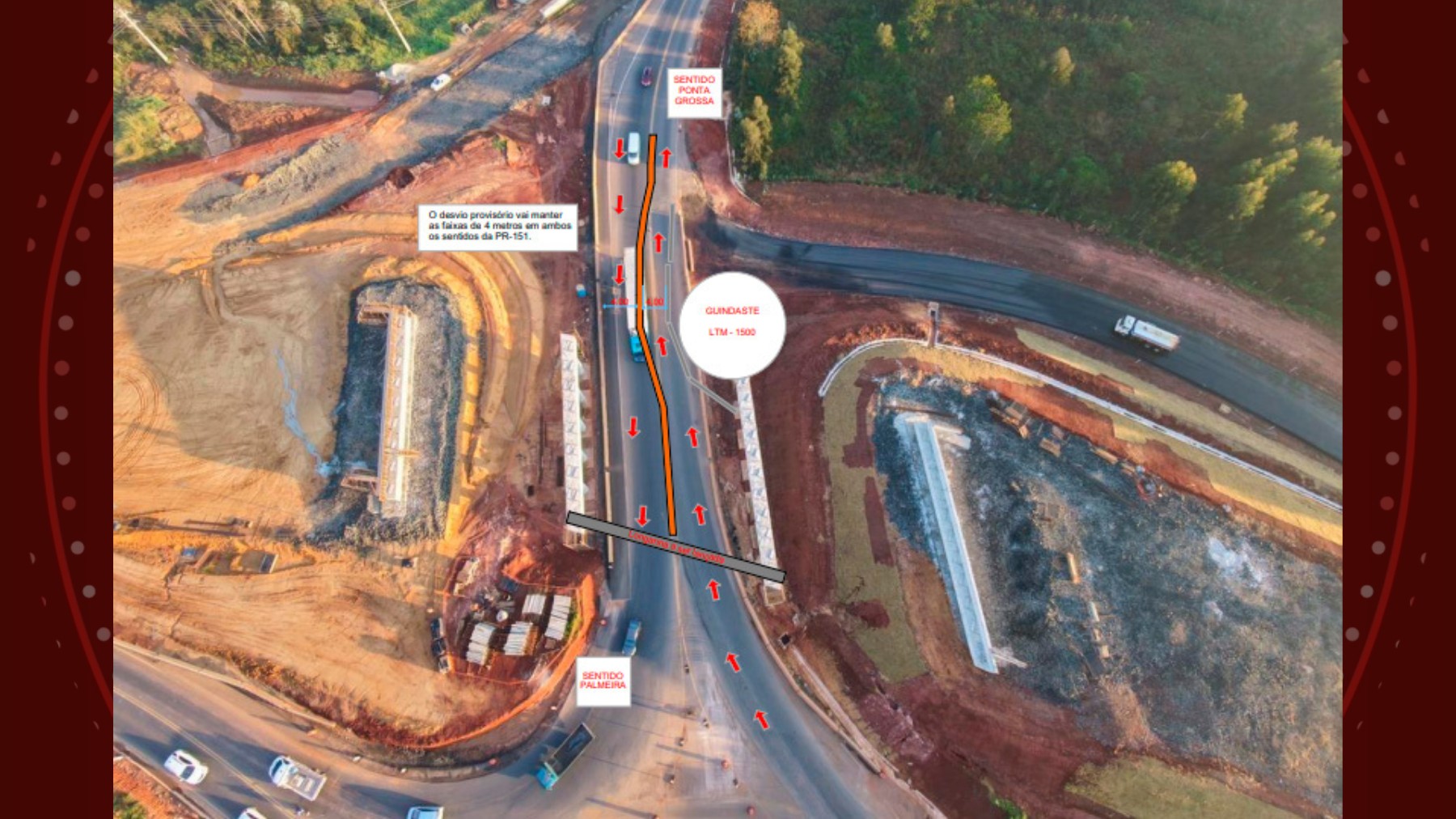
Motorists in Ponta Grossa, Paraná, are experiencing temporary traffic disruptions on the PR-151 highway, specifically on the stretch leading from Ponta Grossa towards Palmeira. These closures began on Friday, July 10th, and are expected to continue until at least Tuesday, July 21st. The reason for the interruptions is the ongoing construction of a new viaduct, which involves the transport and installation of large concrete beams. The Department of Roads of Paraná (DER-PR) announced that total road blockages, lasting up to 45 minutes each, will occur during this phase. To minimize inconvenience, these heavy-duty operations are scheduled primarily during nighttime hours, between 8 PM and 5 AM, and also on weekends. However, some temporary total blockages may also occur at alternating times during the day to facilitate the movement of construction materials. The affected section of the PR-151 is between kilometer markers 338+737 and 343+910. Drivers are advised to reduce speed, adhere to local signage, and plan their journeys in advance to avoid delays. The DER-PR stated that while they aim to complete the work within the planned timeframe, adverse weather conditions such as rain or strong winds could lead to schedule changes or postponements. For those needing to travel between Ponta Grossa and Palmeira, a route of approximately 40 km, alternative detours are available via the BR-376 and BR-277 highways, adding roughly 80 to 88 km to the journey.
The temporary closures on PR-151 highlight the inherent trade-offs between infrastructure development and immediate public convenience. While the construction of a new viaduct and road duplication promises long-term benefits such as improved traffic flow and safety, the short-term impact on commuters necessitates careful logistical planning and transparent communication from the DER-PR. The scheduling of disruptive work during off-peak hours and weekends demonstrates an effort to mitigate negative consequences, but the potential for daytime interruptions underscores the need for robust contingency planning. Looking ahead, as Brazil and other nations increasingly invest in modernizing their transportation networks, the challenge will be to balance the pace of progress with the resilience of existing infrastructure and the adaptability of the traveling public, especially in the face of unpredictable environmental factors.
AI-generated to prompt reflection — not editorial opinion, not advice, not a statement of fact. How this works.