Tencent in talks to acquire majority stake in AI startup Manus
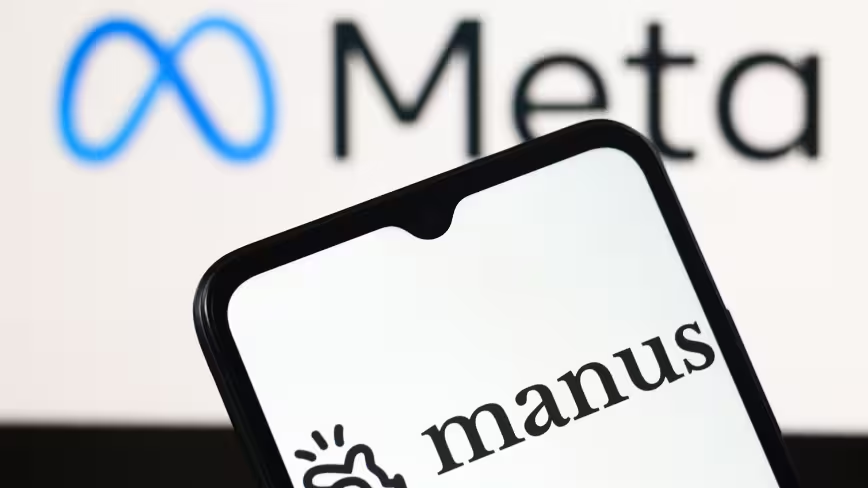
Chinese technology giant Tencent is reportedly in discussions to become the largest shareholder in Manus, an agentic AI startup. Manus gained significant attention late last year when Meta agreed to acquire it for over $2 billion. However, the deal was ultimately blocked by Beijing due to national security concerns. Following the failed acquisition by Meta, the startup is now being repurchased by its original owners. Tencent's potential investment signifies a strategic move into the burgeoning field of agentic AI. The original valuation of Manus at over $2 billion made it one of the most valuable exits in China's AI sector at the time. The national security review process highlights the increasing geopolitical scrutiny of cross-border technology acquisitions, particularly in sensitive AI domains. This development suggests a shift in ownership and control for Manus, moving from a potential foreign acquisition to a domestic consolidation with significant Chinese tech backing.
The aborted Meta acquisition of Manus, followed by Tencent's potential majority stake, illustrates the complex interplay of technological ambition, national security interests, and geopolitical competition in the global AI landscape. While Meta's initial interest underscored Manus's perceived value, China's intervention reflects a broader trend of governments asserting control over critical domestic technology sectors. Tencent's potential investment could signify a strategic effort to bolster China's AI capabilities and retain valuable intellectual property within its borders. This situation highlights the evolving dynamics of M&A in AI, where national interests can override market valuations, potentially leading to a more fragmented global AI ecosystem. The future trajectory of Manus will likely be shaped by its ability to navigate these strategic imperatives while continuing to innovate in the agentic AI space.
AI-generated to prompt reflection — not editorial opinion, not advice, not a statement of fact. How this works.