Tencent's Marvis AI Agent Focuses on System-Level Operations, Not General Capabilities
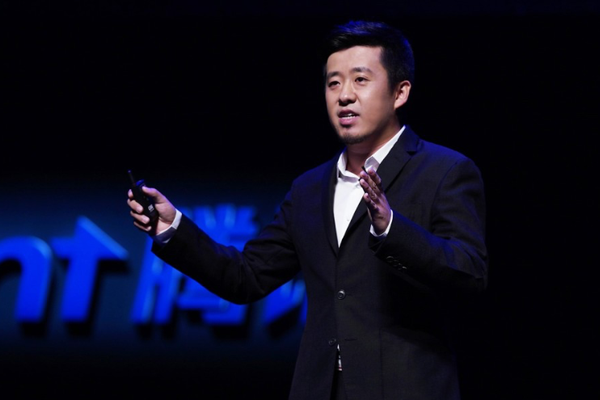
Tencent Vice President Lin Songtao announced that Marvis, a system-level AI agent, has achieved a daily active user count exceeding 300,000 within two days of its launch, with a seven-day retention rate of approximately 54%. Unlike general-purpose AI agents, Marvis specializes in system-level operations, with users primarily utilizing its capabilities for local file management (44%), computer hardware management (28%), and browser tasks (18%). Only about 6% of users employ it for information searches, indicating a clear understanding of its intended function as distinct from broader AI assistants. Marvis, initially conceived as a "device AI assistant" in early 2025, emphasizes task completion as its core metric, diverging from traditional engagement metrics like DAU or session counts. The product, developed by Tencent's App Store team, prioritizes user experience with a simple, visually engaging interface, featuring a mascot reminiscent of QQ's penguin. Marvis is designed for cross-platform use, focusing on devices like PCs and AI Boxes rather than resource-constrained mobile phones, aiming to leverage local processing power for efficiency and privacy. The team is collaborating with Tencent's Hunyuan AI model to develop edge-side model clusters for Marvis. In parallel, the App Store team has launched "Toast," a mobile coding tool, representing their exploration of AI's impact on application distribution and service delivery. Marvis aims to provide a more efficient and accurate AI solution by integrating deeply with the operating system, contrasting with cloud-dependent general agents that may rely on less efficient visual recognition methods for local tasks. Tencent sees its relationship with system manufacturers as complementary, enhancing application integration and cross-platform functionality. The company is also exploring international markets, recognizing a more mature user base for paid AI tools abroad. Future updates for Marvis include enhancing its "Skills Plaza" with more content and developers, introducing a "Talent Market" for virtual assistants, and expanding its edge-side capabilities for broader device support and improved privacy.
Tencent's Marvis initiative reflects a strategic pivot in AI agent development, prioritizing deep system integration and task-specific efficiency over broad, general-purpose capabilities. This approach addresses the inherent limitations of cloud-centric AI for local device operations, where latency and data privacy are paramount. By focusing on system-level access, Marvis aims to provide a more robust and responsive user experience, particularly for tasks involving file management and hardware control. The emphasis on cross-platform deployment across PCs and AI Boxes, rather than mobile devices, suggests a recognition of where complex computational tasks can be most effectively handled. This strategy positions Marvis to potentially capture a significant segment of the productivity-focused AI market, offering a distinct value proposition against more generalized competitors. The long-term success will likely hinge on its ability to continuously adapt to evolving AI models while maintaining its specialized edge and fostering a developer ecosystem for its 'Skills Plaza'.
AI-generated to prompt reflection — not editorial opinion, not advice, not a statement of fact. How this works.