Terminally Ill Cancer Patient Marries Partner in Hospital, Dies Two Days Later
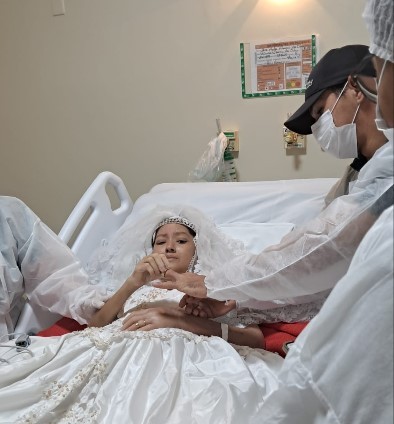
Ana Paula Ribeiro, a 26-year-old cancer patient in advanced stages, fulfilled her dream of marrying her partner, Felipe Alves, 32, within the walls of the Hospital Napoleão Laureano in João Pessoa. The wedding ceremony took place on Friday, March 3rd. The couple had been together for eight years and had planned to marry after Ana Paula's recovery. However, her diagnosis of T-cell ‘non-Hodgkin’ lymphoma, discovered after the birth of their three-month-old daughter, altered their plans. Felipe recounted that they had always intended to marry, but he had hoped for a church ceremony once she was well. Due to her deteriorating health, they decided to expedite the wedding. In less than a week, volunteers and hospital staff organized the event, providing a wedding dress, rings, music, cake, and a pastor to officiate. Ana Paula passed away two days after the ceremony, on Sunday, March 5th, with Felipe by her side. She expressed her love, asked him to care for their two daughters, and then died. The initiative was significantly supported by volunteer Maria de Lourdes, known as "Bom Te Ver" or "Lurdinha," who has been a volunteer clown for 20 years. She was inspired to help after a conversation with Ana Paula, who revealed her wish to marry in a wedding dress. Lurdinha rallied support from hospital administration and the community, quickly securing donations for the wedding necessities. Despite initial bureaucratic hurdles, the hospital's sanitary surveillance team ultimately granted authorization, ensuring the patient's well-being for the ceremony. The event was described as an emotional gathering of 'angels' who helped fulfill Ana Paula's final wish.
This event highlights the profound human desire for connection and ceremony, even in the face of terminal illness. The rapid mobilization of hospital staff and community volunteers underscores the capacity for compassion and organized support within healthcare settings when personal wishes are prioritized. From a systemic perspective, it raises questions about hospital protocols regarding patient life events and the balance between medical necessity and quality of life. While celebrating the emotional fulfillment for the individuals involved, it also implicitly points to the potential for more integrated patient care models that accommodate significant personal milestones. Looking ahead, as healthcare systems increasingly leverage technology, the integration of such deeply human needs into care pathways, perhaps through advanced telemedicine or dedicated patient advocacy roles, could become more feasible, ensuring dignity and personal fulfillment are recognized as critical components of care, not just medical outcomes.
AI-generated to prompt reflection — not editorial opinion, not advice, not a statement of fact. How this works.