Terraforming Mars Faces Fundamental Limits, Study Finds
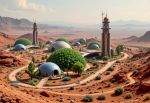
Mars has long been considered a potential candidate for becoming a second Earth. However, making the planet habitable would require immense amounts of energy and resources, according to a new study. The research highlights the significant challenges and vast scale of undertaking such a project.
The study calculates the colossal energy and resource demands necessary to transform Mars into a livable environment. These findings suggest that current technological capabilities and resource availability may be insufficient for successful terraforming. The sheer magnitude of the undertaking presents fundamental limitations that cannot be easily overcome.
The concept of terraforming Mars, while scientifically intriguing, encounters significant practical and theoretical hurdles. The study's findings underscore the immense resource and energy investments required, raising questions about the economic and logistical feasibility given current global capabilities. Future advancements in energy generation, resource extraction, and atmospheric engineering would be necessary to overcome these fundamental limitations. Evaluating such ambitious projects requires considering long-term sustainability, potential unforeseen environmental impacts on Mars, and alternative strategies for space exploration and habitation.
AI-generated to prompt reflection — not editorial opinion, not advice, not a statement of fact. How this works.