Tesla Semi Involved in Fatal Accident, Raising Safety Questions
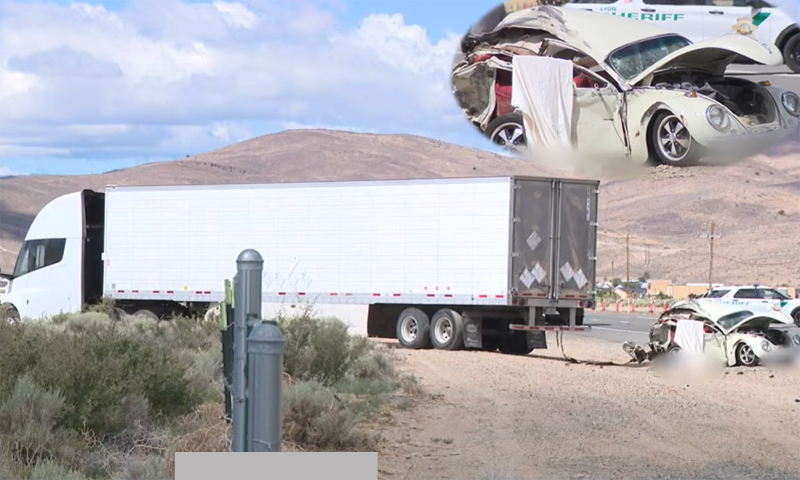
The first reported accident involving a Tesla Semi electric truck has occurred, raising concerns about its active safety features. The incident, which resulted in a fatality, is suspected to have been caused by the driver falling asleep at the wheel. This event prompts scrutiny into the technological capabilities and reliability of the advanced safety systems designed to prevent such tragedies. Tesla has been developing the Semi with a focus on electrification and advanced driver-assistance systems. However, this accident highlights a critical challenge: ensuring that technology can effectively mitigate human error, especially in long-haul trucking where driver fatigue is a significant risk. The investigation into the exact cause of the crash is ongoing, but the initial suspicion points to driver drowsiness. This incident could impact the public perception and regulatory review of autonomous and semi-autonomous driving technologies in heavy-duty vehicles. Further details are expected as authorities complete their investigation.
This incident involving the Tesla Semi underscores the complex interplay between advanced vehicle technology and human factors in road safety. While electric trucks and their integrated safety systems aim to reduce accidents, they do not eliminate the fundamental risks associated with human operation, such as driver fatigue. The event prompts consideration of how current safety technologies, including driver monitoring and automated emergency braking, perform under real-world conditions and against human error. Future developments in this sector will likely need to balance technological innovation with robust systems for managing driver alertness and ensuring fail-safe mechanisms. The long-term viability and adoption of such vehicles may depend on demonstrating consistent safety performance that surpasses traditional trucking, particularly in mitigating risks inherent to the profession.
AI-generated to prompt reflection — not editorial opinion, not advice, not a statement of fact. How this works.