TESS Satellite Discovers Jupiter-Like Exoplanet Using Gravitational Microlensing
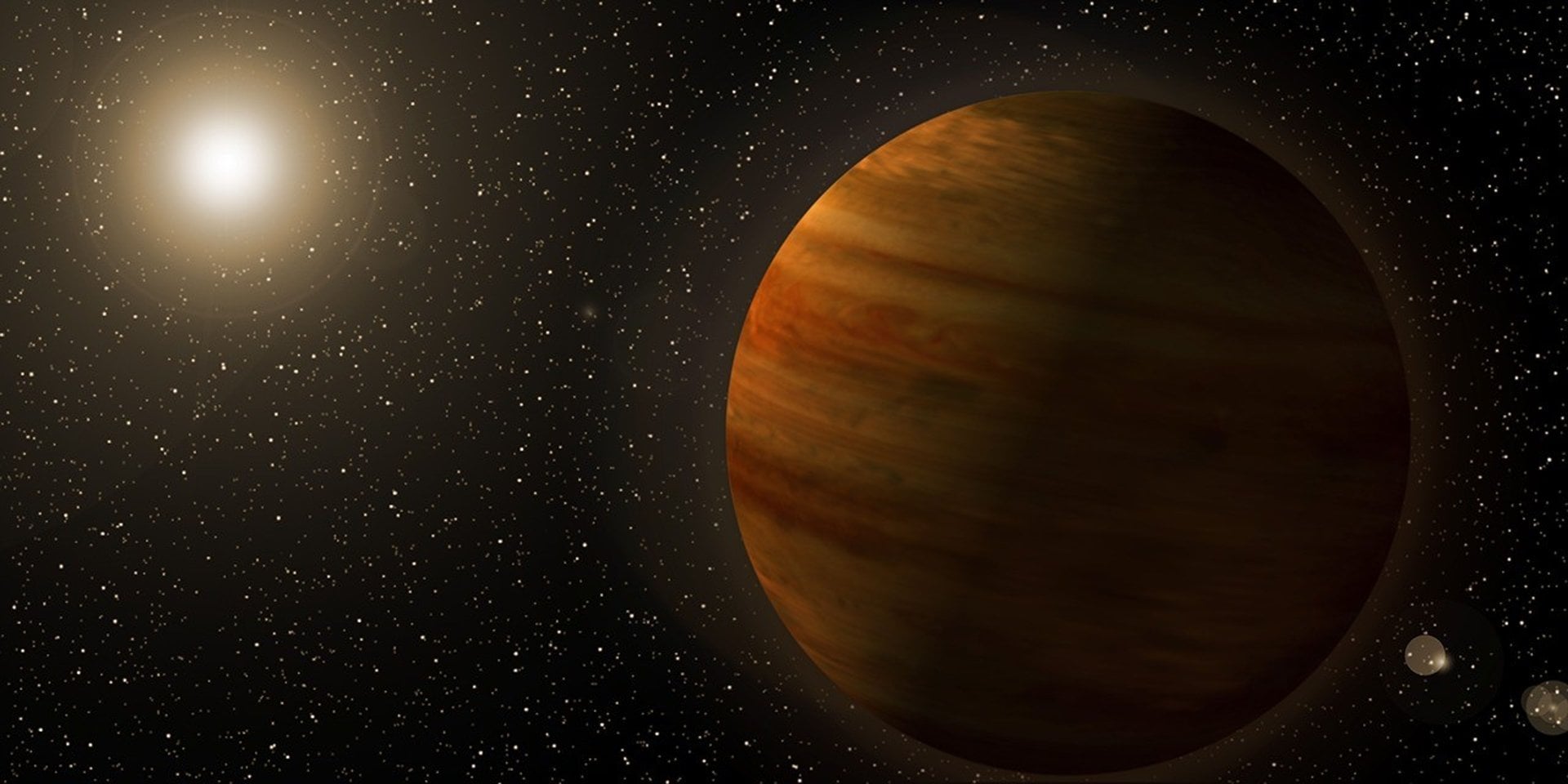
NASA's Transiting Exoplanet Survey Satellite (TESS) has detected a Jupiter-sized exoplanet orbiting a distant star. This discovery was made possible by employing gravitational microlensing, a phenomenon predicted by Einstein's theory of relativity. This marks the first time TESS has utilized this technique to identify an exoplanet. The successful application of gravitational microlensing by TESS suggests the potential for the satellite to uncover a new class of planets that were previously undetectable. This innovative approach broadens the scope of TESS's exoplanet hunting capabilities, opening new avenues for astronomical research and the understanding of planetary systems beyond our own.
The application of gravitational microlensing by TESS represents a significant advancement in exoplanet detection methodologies. By leveraging a principle of general relativity, TESS can now probe for planets that may not transit their host stars in ways detectable by traditional transit photometry. This expands the parameter space for planet discovery, potentially revealing a population of exoplanets with orbital characteristics or compositions that differ from those found through prior methods. Such a development could refine our understanding of planetary formation and evolution across diverse stellar environments, offering a more comprehensive census of the galaxy's planetary systems and informing future missions designed to characterize these worlds.
AI-generated to prompt reflection — not editorial opinion, not advice, not a statement of fact. How this works.