The Ancient Origins and Traditions of the Rath Yatra Festival
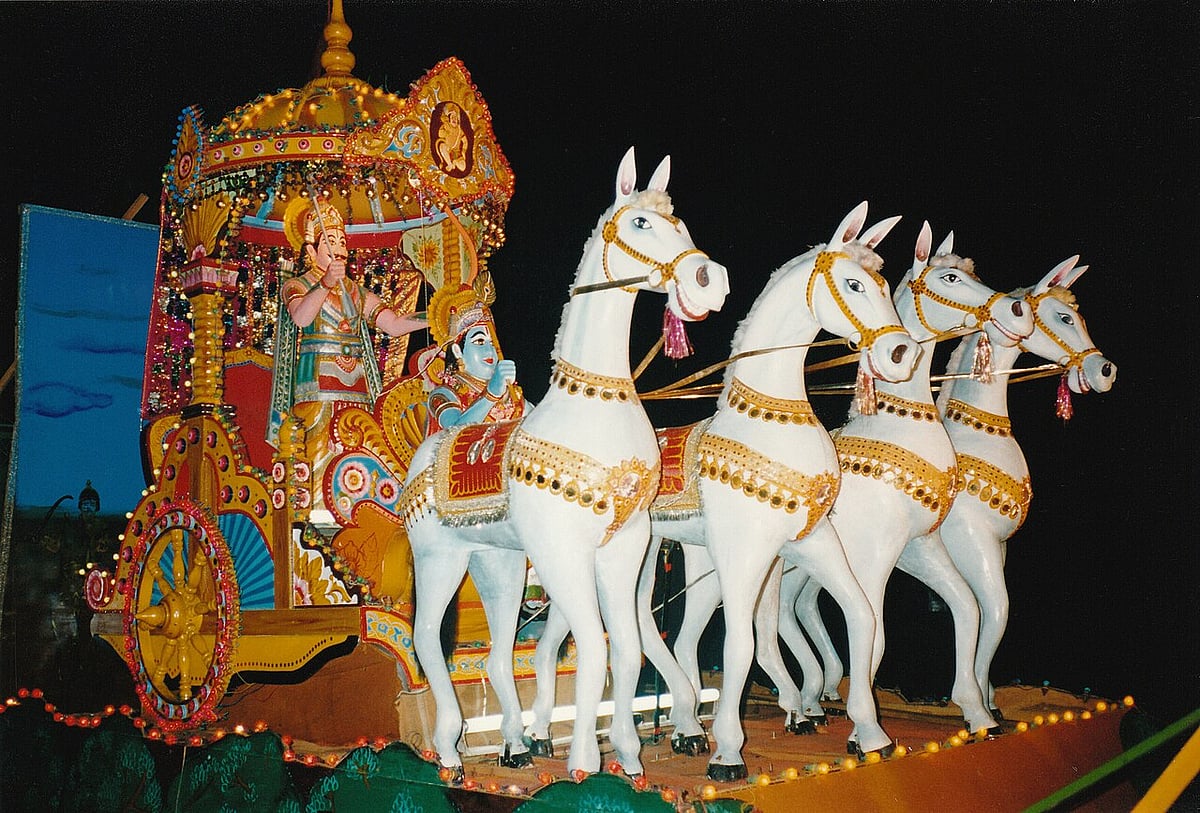
The Rath Yatra, a primary festival among the many celebrated by Hindus, takes place on the second day of the waxing moon in the month of Ashadh, typically during the heavy monsoon season, and is especially prominent in Eastern India. While celebrated with great fervor across the region, the event in Puri, a city on the coast of the Bay of Bengal, draws global attention.
The festival's origins are traced back to ancient times, with a Puranic narrative explaining its inception. Following Lord Krishna's demise, his partially cremated body washed ashore near the ancient Kalinga kingdom due to natural calamities. Local tribes, the Shabars, discovered the remains and began worshipping them as 'Nilamadhav' in a nearby forest, eventually constructing a temple. The fame of Nilamadhav spread, reaching King Indradyumna of Avanti, a devotee of Vishnu. When Indradyumna attempted to bring Nilamadhav to his kingdom, he was resisted by the Shabars. Seeking divine guidance, Vishnu appeared to Indradyumna in a dream, instructing him to craft a deity from a piece of wood that would wash ashore near Puri and to worship it. The construction of the idol was to be done in seclusion, with strict orders against any disturbance. However, an impatient Indradyumna eventually broke the rule, discovering the idol half-finished and the craftsman, believed to be Vishwakarma, gone. Advised by Narada Muni to worship the incomplete idol, Indradyumna consequently initiated the Rath Yatra in Puri, where Lord Jagannath has been worshipped since.
The construction of the chariots begins annually on Akshaya Tritiya. Sixteen days prior to Rath Yatra, a grand Snana Yatra takes place, usually on the full moon of Jyeshtha, where Jagannath, Subhadra, and Balaram are bathed. Following this, Lord Jagannath is believed to contract a fever and remains secluded for fifteen days, during which new idols are prepared. On the day of Rath Yatra, the deities are placed on three distinct, colorfully decorated chariots and travel from the main temple to the Gundicha Temple, referred to as their 'aunt's house,' located three kilometers away. Jagannath's chariot, Nandighosha, stands 45 feet tall with 16 wheels, carrying various other deities and attendants. Subhadra's chariot, Darpadalan, is 43 feet high with 12 wheels, and Balaram's chariot, Taladhwaja, is 44 feet high with 14 wheels. The Puri king sweeps the path with a golden broom before the chariots depart. A week later, on Ulta Rath, the siblings return home. The wood from the chariots is later used as fuel for the offerings to Lord Jagannath in the main temple. A unique aspect of this festival is the inclusive participation of all castes and classes. Literary figures like Bankim Chandra and Rabindranath Tagore have written about Rath Yatra. The Mahish Rath, with a history of 630 years, is considered the first in Bengal and second globally, originating from a divine instruction to Dhruvananda Brahmachari. Sri Chaitanya Mahaprabhu also visited and renamed the place 'Nava-Nilachala'. The festival is also celebrated with great enthusiasm in Bangladesh, particularly in Dhamrai, where a massive six-story chariot carrying deities has been pulled for over 400 years, accompanied by a month-long fair featuring various attractions. The poet Jasimuddin has also penned verses about the Dhamrai Rath.
The Rath Yatra festival, deeply rooted in Puranic narratives and ancient traditions, exemplifies the enduring power of religious belief and cultural continuity. The story of its origin, involving divine intervention, royal endeavor, and the creation of idols from natural elements, highlights a historical reverence for the divine manifested in physical form. The logistical undertaking of constructing massive chariots and the associated rituals, such as the Snana Yatra and the deities' temporary seclusion, underscore the intricate organizational and spiritual dimensions of the festival. The inclusive nature of Rath Yatra, transcending social strata, reflects a societal ideal of unity and shared spiritual experience. Furthermore, the festival's literary and historical documentation, from ancient texts to modern poetry and historical accounts of sites like Mahish and Dhamrai, demonstrates its profound cultural impact across generations and regions, serving as a testament to its significance beyond mere religious observance.
AI-generated to prompt reflection — not editorial opinion, not advice, not a statement of fact. How this works.