The Camino de Santiago: From Ancient Martyrdom to Modern Pilgrimage Icon
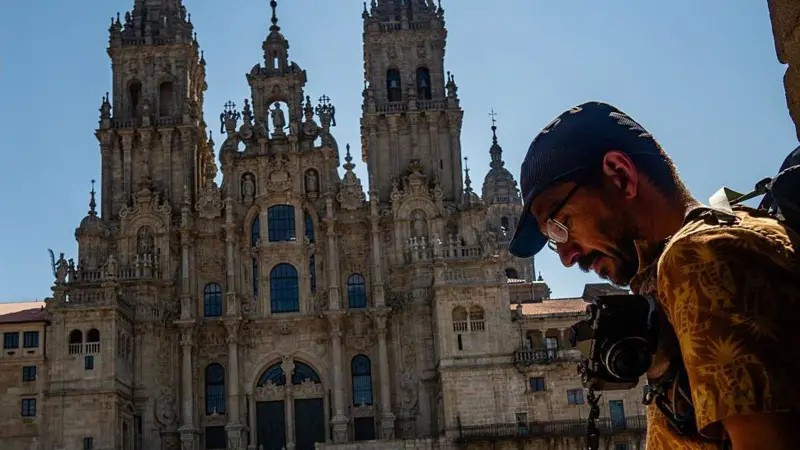
The Camino de Santiago, a medieval Christian pilgrimage route, has transformed into a contemporary mystical-pop icon, significantly boosted by author Paulo Coelho's 1980s experience and subsequent books. This journey, spanning 800 kilometers from southern France to Santiago de Compostela in Spain, now attracts over 500,000 pilgrims annually, a stark contrast to the approximately 2,500 who traveled it when Coelho made the trek. In 2025, 530,987 individuals completed the route, with motivations split among cultural, religious, and combined reasons. Brazilians rank 12th in nationality, with nearly 8,500 participants, while Spaniards lead significantly with 228,000, followed by Americans, Italians, and Germans. The route's historical significance stems from Saint James the Great, one of Jesus's apostles, honored annually on July 25th. Historical accounts from early Christianity, including the Gospels and Acts of the Apostles, suggest James was a Galilean fisherman and part of Jesus's inner circle, possibly nicknamed "sons of thunder" due to his impetuous nature. He is considered the first Christian martyr, reportedly beheaded by King Herod Agrippa I between 41 and 44 AD, a fact corroborated by the context provided by historian Josephus. While the New Testament narrative places his martyrdom in Jerusalem, a tradition emerged in the Middle Ages, between the 7th and 9th centuries, suggesting his body was transported to Galicia, Spain, and buried there. This tradition led to the construction of the Cathedral of Santiago de Compostela over a tomb discovered by Bishop Teodomiro. Despite the immense distance and historical doubts about the body's transport, the Catholic Church acknowledges the secular tradition of veneration and its spiritual fruits, referring to the Compostela site as a memorial rather than definitively a tomb. The modern surge in popularity is also attributed to social media, with some pilgrims citing Instagram posts as a primary motivation.
The evolution of the Camino de Santiago from a medieval religious pilgrimage to a contemporary phenomenon highlights the interplay between historical religious narratives, popular culture, and modern motivations. The significant increase in pilgrims, particularly in recent decades, suggests a shift in the primary drivers for undertaking the journey, with cultural tourism and social media sharing now playing a substantial role alongside traditional religious faith. While the historical and religious significance of Saint James remains a foundational element, the route's current appeal demonstrates how ancient traditions can be reinterpreted and amplified by contemporary media and celebrity influence. This dynamic raises questions about the commodification of spiritual journeys and the potential for secular interests to overshadow original religious intent. The Church's careful distinction between a memorial and a definitive tomb reflects an acknowledgment of popular devotion while navigating historical uncertainties, a strategy that balances tradition with academic scrutiny.
AI-generated to prompt reflection — not editorial opinion, not advice, not a statement of fact. How this works.