The Deer of Charja
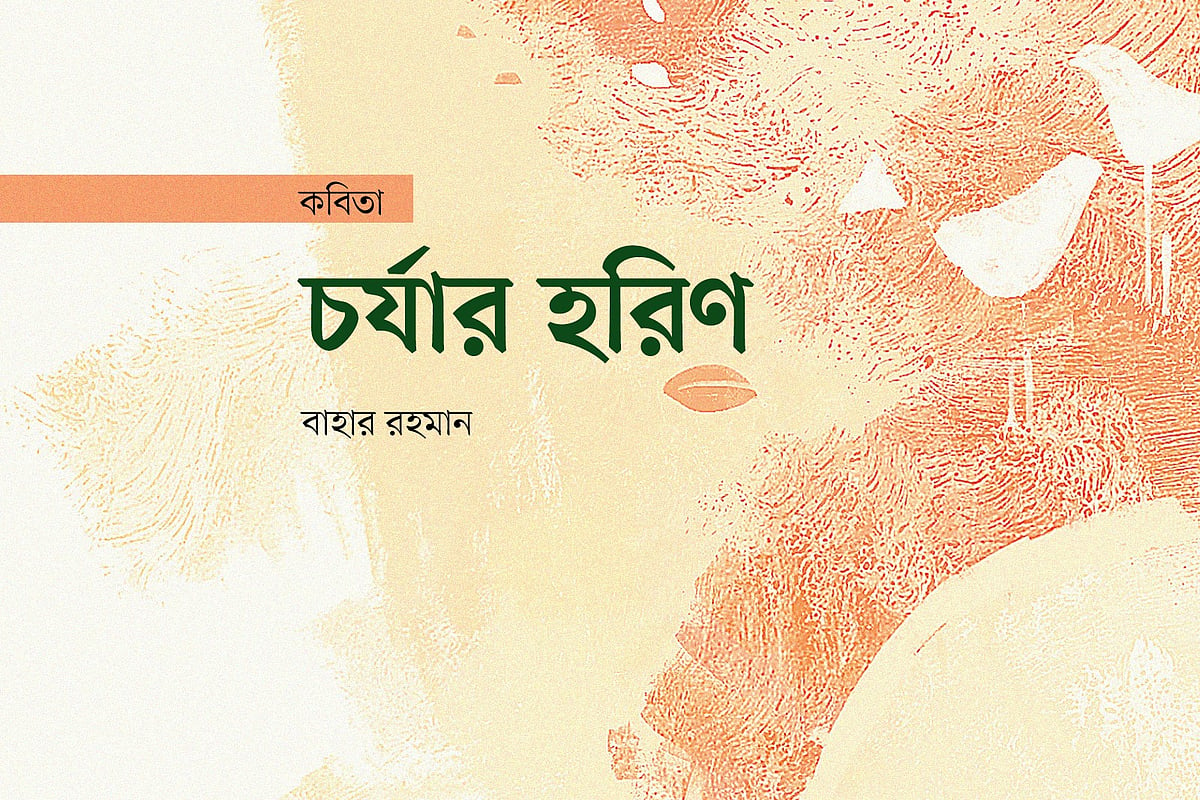
The poem 'The Deer of Charja' presents a metaphorical self-portrait of the speaker as a deer, hiding its face and believing itself unseen. This natural, inherent human trait is described as the speaker's identity. The physical form is depicted as a partially revealed cave painting, with the rest being formless and unseen. The speaker observes the moon rising on their forehead, a sight that transcends time, both seen and unseen. A gentle smile from another figure is noted, who is counting the errors or misfortunes. The poem concludes by characterizing life as a vast, boundless, and infinite great river.
This poetic piece uses the metaphor of a deer to explore themes of self-perception, hidden identity, and the passage of time. The 'deer' represents an individual's natural inclination to conceal aspects of themselves, believing in their invisibility. The imagery of a cave painting suggests a primal, incomplete self-representation. The interaction with another character, who is 'counting the errors,' introduces a societal or relational dimension, highlighting external judgment or the accumulation of life's difficulties. The concluding metaphor of life as an 'infinite great river' evokes a sense of overwhelming scale and continuous flow, inviting contemplation on human existence within a vast, indifferent universe. The poem prompts reflection on the balance between inner self and external perception, and the transient nature of both individual experience and life itself.
AI-generated to prompt reflection — not editorial opinion, not advice, not a statement of fact. How this works.