The Enduring Mathematical Mystery: A 350-Year Quest for Fermat's Last Theorem
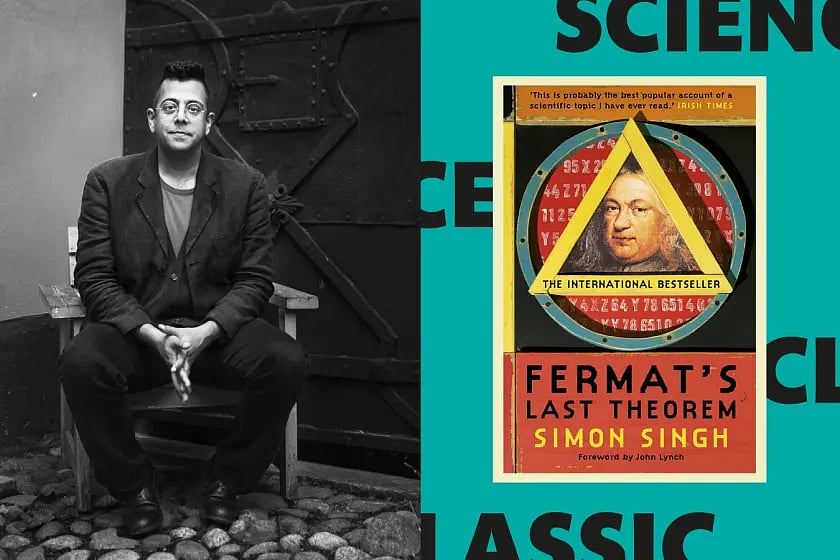
The number 26 holds a unique mathematical property: it is the only integer between a perfect square (25, or 5²) and a perfect cube (27, or 3³). This intriguing observation is just one example of the deep mathematical beauty explored in Simon Singh's renowned book, "Fermat's Last Theorem." The book chronicles the arduous 350-year journey mathematicians undertook to prove this theorem, a quest that effectively weaves through the history of mathematics itself.
The narrative begins with Pythagoras and his foundational theorem on right-angled triangles (x² + y² = z²). It delves into the historical context, even mentioning a plot against Pythagoras by a spurned individual named Cyclon. The central figure, however, emerges in the 17th century: Pierre de Fermat, a French judge with a hidden talent for mathematics. Fermat claimed to have a proof for his famous last theorem, which stated that for any integer n greater than 2, the equation xⁿ + yⁿ = zⁿ has no positive integer solutions. Astonishingly, Fermat never documented his proof, sparking centuries of intense pursuit by mathematicians worldwide.
Singh highlights key figures in this pursuit, including the brilliant but marginalized French mathematician Sophie Germain, who worked under a male pseudonym due to societal constraints. The story also features the revolutionary young mathematician Évariste Galois, who died in a duel shortly after making groundbreaking discoveries, and the talented Japanese mathematician Yutaka Taniyama, who laid crucial groundwork for the proof but tragically took his own life. The ultimate resolution came in 1994, when Andrew Wiles, after years of dedicated work, presented a valid proof by establishing a connection between two previously thought-to-be unrelated mathematical fields: elliptic curves and modular forms. Wiles's journey was fraught with challenges, including the discovery of an error in his initial proof, which he painstakingly corrected, demonstrating remarkable perseverance. The book suggests that such connections, as proposed by Robert Langlands in 1967, hint at an underlying unity in mathematics, a concept still actively explored by mathematicians today.
This narrative showcases the profound human drive for intellectual discovery and the collaborative, yet often solitary, nature of mathematical progress over centuries. The 350-year quest for Fermat's Last Theorem highlights how a single, unproven assertion can ignite generations of research, pushing the boundaries of abstract thought and revealing deep interconnections between disparate mathematical fields. The story also implicitly addresses the societal and personal costs of pursuing such complex intellectual challenges, noting the sacrifices and struggles of individuals like Sophie Germain, Évariste Galois, and Yutaka Taniyama. In the context of an AI-driven future, understanding these historical patterns of problem-solving, proof, and the evolution of mathematical frameworks offers insights into how complex systems are built and validated, potentially informing future AI research methodologies and the pursuit of artificial general intelligence.
AI-generated to prompt reflection — not editorial opinion, not advice, not a statement of fact. How this works.