The Ethics of Eavesdropping and Public Discourse
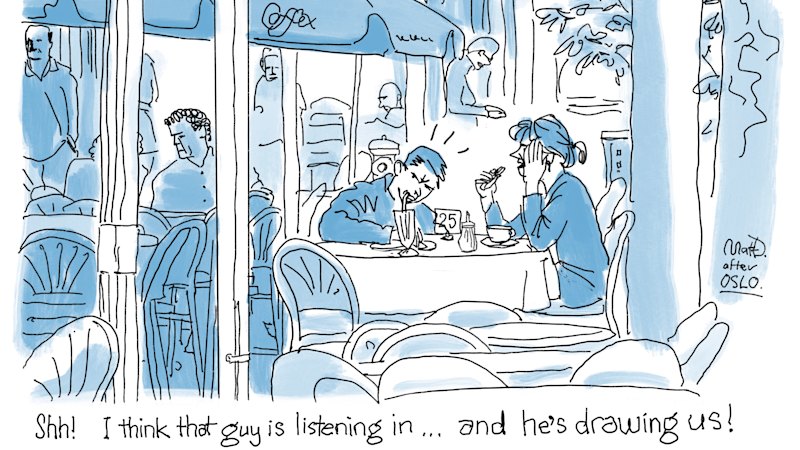
The author reflects on the human inclination towards eavesdropping, a behavior often discouraged in childhood but which persists into adulthood. This tendency, the piece suggests, is partly fueled by a desire for an audience and a fascination with the private lives of others. The core of the reflection lies in the tension between this innate curiosity and the expectation of privacy in public spaces. It questions what individuals should reasonably expect to overhear when navigating shared environments. The piece highlights the inherent conflict between our natural inclination to listen in and the social contract that implies a degree of privacy, even when in public. It touches upon the psychological aspect of eavesdropping, suggesting it can be a way to feel connected or informed, yet also acknowledges the ethical boundaries that are often crossed.
This piece explores the psychological drivers behind eavesdropping, framing it as a common human behavior that intersects with societal norms of privacy. It prompts consideration of the evolving boundaries of public versus private discourse in an era of increased connectivity. The analysis suggests that while individual curiosity is a natural human trait, the public sphere necessitates a re-evaluation of how we balance this with the right to be free from unwanted intrusion. Understanding the underlying motivations for such behavior can inform discussions on urban design, social etiquette, and the digital public square, encouraging more mindful interactions.
AI-generated to prompt reflection — not editorial opinion, not advice, not a statement of fact. How this works.