The Fading Craftsmanship of Taksar Bazaar
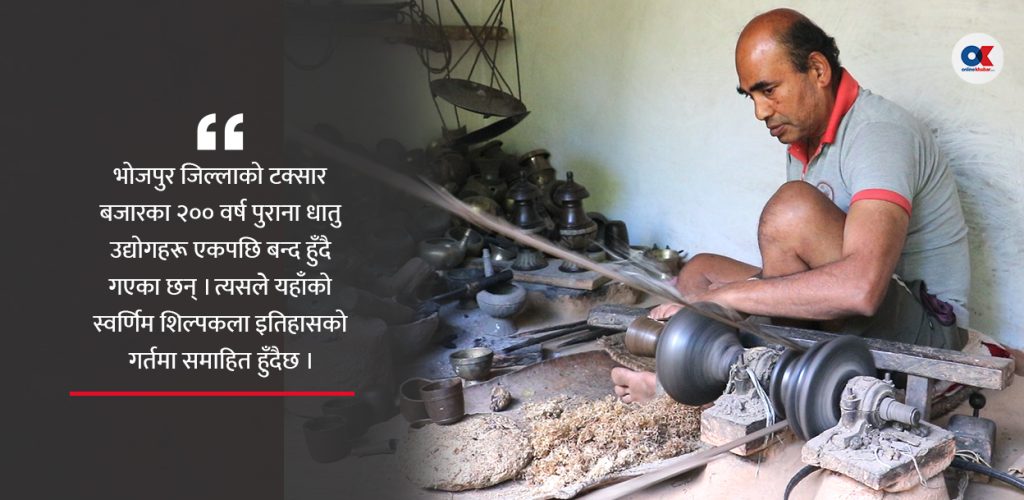
Taksar Bazaar, located approximately 1.5 kilometers from the district headquarters of Bhojpur Bazaar, is a place with a rich history in metal craftsmanship. The metal industries in this area boast a legacy stretching back approximately 200 years. Despite its historical significance, the traditional crafts of Taksar Bazaar appear to be in decline. The article highlights the fading nature of this once-thriving artisanal hub. The proximity to the district headquarters suggests potential for integration and support, yet the crafts are diminishing. This decline raises questions about the preservation of cultural heritage and the economic viability of traditional skills in the region. The historical depth of 200 years underscores the potential loss of unique techniques and knowledge if current trends continue.
The historical significance of Taksar Bazaar's metal crafts, spanning two centuries, presents a case study in the challenges of preserving traditional industries. The proximity to the district headquarters suggests that policy and infrastructure could play a role in revitalization. The apparent decline indicates a potential disconnect between heritage value and contemporary economic drivers, possibly influenced by market demand shifts, technological advancements, or labor migration. Future sustainability may depend on adapting traditional skills to modern markets, fostering new generations of artisans, or integrating these crafts into cultural tourism initiatives, thereby ensuring their economic and cultural continuity.
AI-generated to prompt reflection — not editorial opinion, not advice, not a statement of fact. How this works.