The Immense Challenge of Recreating Cosmic Scale in Video Games
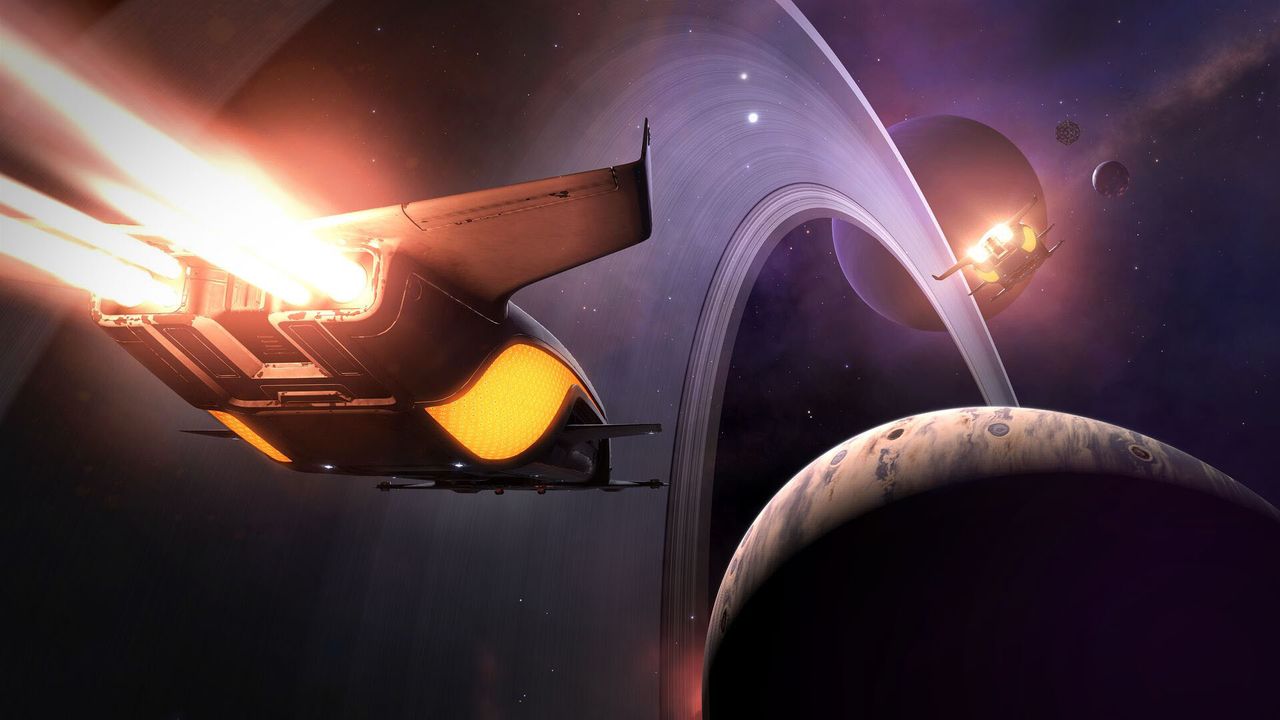
Video games continue to grapple with accurately representing the true vastness of space, a challenge highlighted by the sheer scale of the universe. The original quote, "Space is big. You just won't believe how vastly, hugely, mind-bogglingly big it is," underscores the fundamental difficulty in translating this immensity into an interactive digital experience. Developers face the ongoing problem of balancing realistic cosmic proportions with gameplay mechanics that are engaging and comprehensible for players. This often leads to compromises, where game worlds are scaled down or abstracted to make exploration and interaction feasible within a reasonable playtime. The discrepancy between the actual size of celestial bodies and distances in space, and their representation in games, remains a persistent hurdle for the genre. Achieving a sense of awe and wonder associated with the cosmos while maintaining player agency and immersion is a delicate act. The struggle persists as technology advances, pushing developers to find innovative solutions to better capture the grandeur of the universe.
The persistent challenge in space games stems from a fundamental tension between the objective, astronomical scale of the universe and the subjective, human-centric design of interactive entertainment. Game developers must reconcile the vast distances and object sizes that are computationally intensive and conceptually overwhelming with player expectations for navigable environments and meaningful interaction. This often necessitates a deliberate reduction in scale, prioritizing gameplay loops over strict verisimilitude. Looking ahead, advancements in procedural generation, cloud computing, and more intuitive player interfaces may offer pathways to more convincingly represent cosmic scale without sacrificing player engagement. The industry's ongoing effort to bridge this gap reflects a broader societal fascination with space exploration and a drive to make the abstract tangible through technology.
AI-generated to prompt reflection — not editorial opinion, not advice, not a statement of fact. How this works.