The Joy and Peril of Making Incorrect Market Predictions
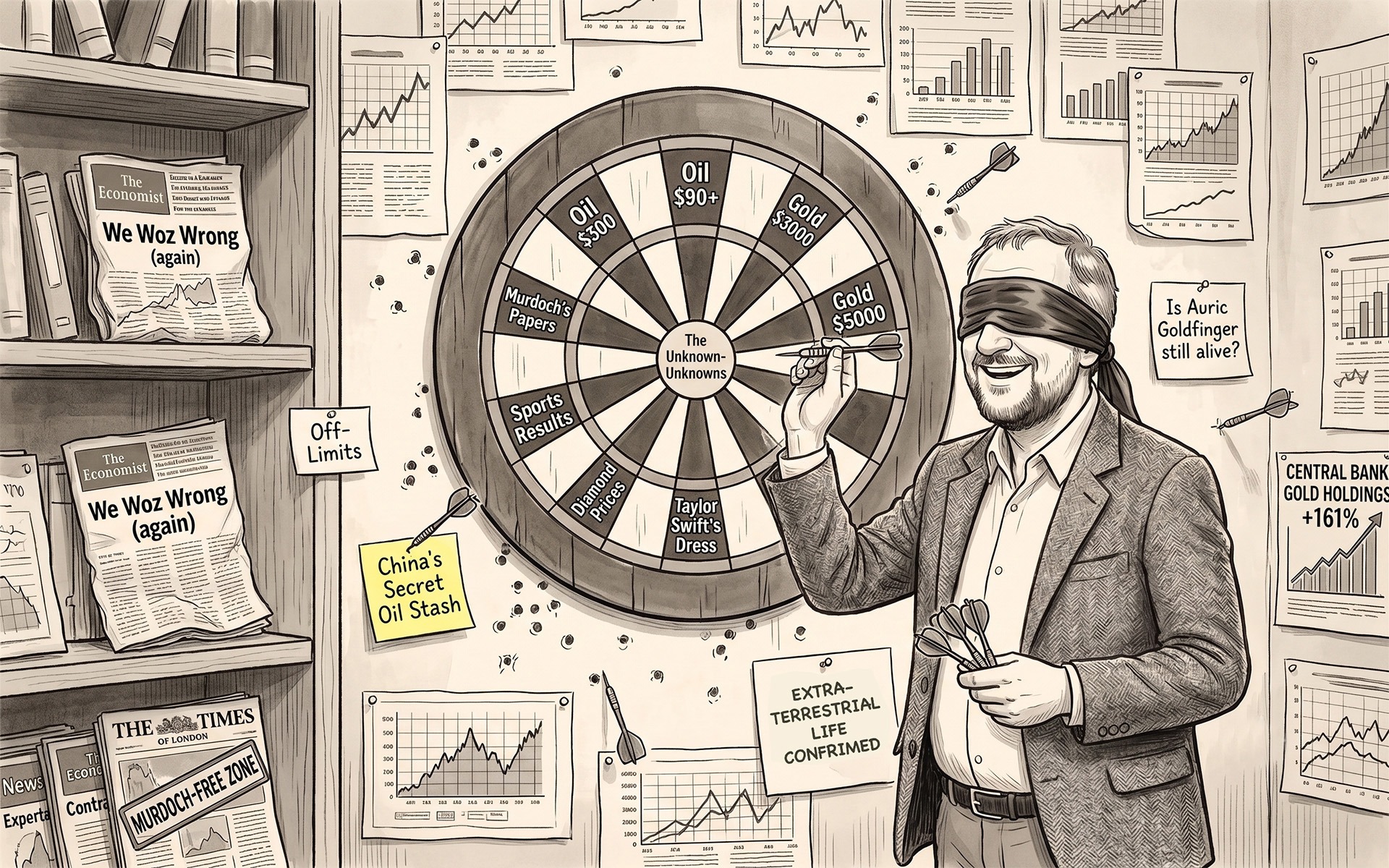
The inherent unpredictability of markets presents a significant challenge for forecasters, a fact underscored by the experiences of publications like The Economist. Despite these difficulties, the process of making predictions remains a fascinating endeavor. It is the interplay between what is known and what is fundamentally unknowable that fuels this intrigue. This dynamic makes the act of forecasting a captivating pursuit, even when the outcomes deviate from expectations. The joy, therefore, can be found not just in accuracy, but in the very process of engaging with market uncertainty. The unknown-unknowns, in particular, offer the most compelling aspects of market analysis and prediction.
Market forecasting inherently involves navigating uncertainty, where the accuracy of predictions is often constrained by unforeseen variables. While publications like The Economist face the public scrutiny of their market outlooks, the value of prediction lies less in its infallibility and more in the analytical rigor it demands. The field of financial forecasting grapples with the tension between established economic models and the emergent, unpredictable nature of human behavior and global events. Future advancements in AI may offer more sophisticated tools for analyzing complex data sets, potentially improving predictive accuracy, but the fundamental unpredictability of markets, particularly concerning 'unknown-unknowns,' will likely persist, shaping investor strategies and risk management approaches for the foreseeable future.
AI-generated to prompt reflection — not editorial opinion, not advice, not a statement of fact. How this works.