The New Yorker Article on Argentina's World Cup Team Sparks Outrage
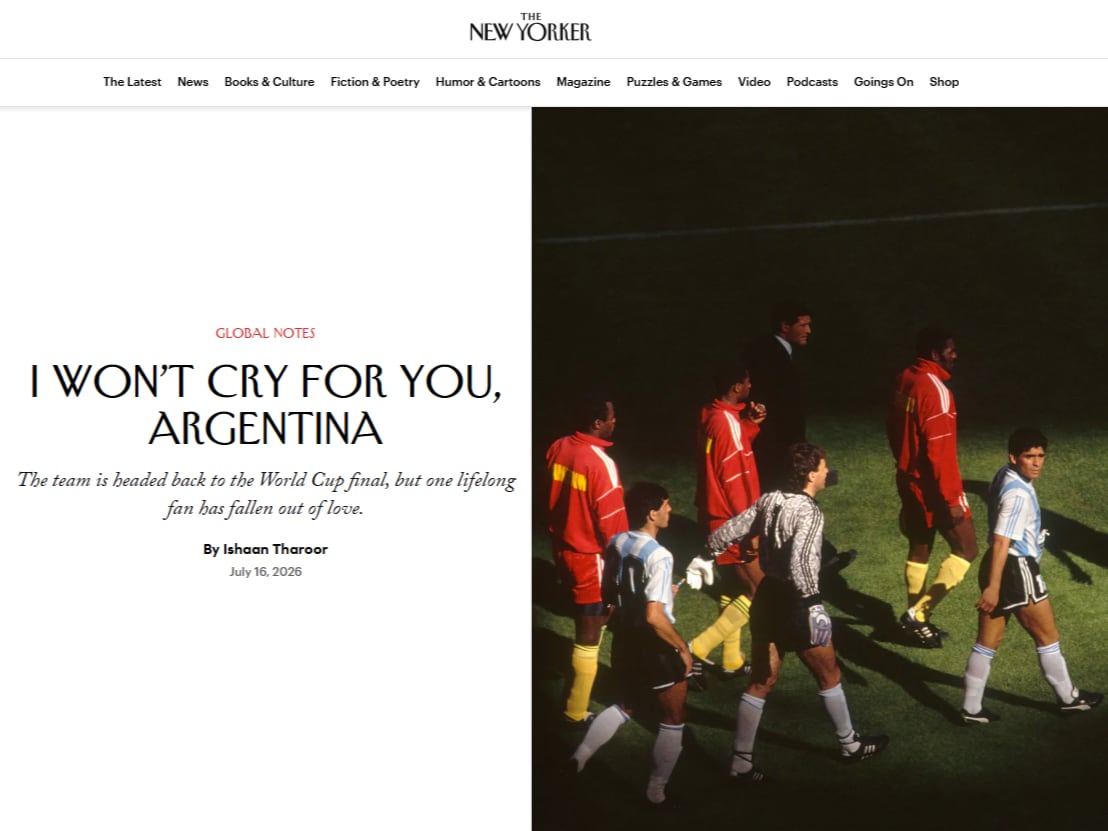
An article published in The New Yorker by Ishaan Tharoor has ignited controversy and indignation online. Tharoor, who previously admired Argentinian "fanaticism" and "elegant arrogance," now views the national team as the "villain" of the current World Cup. The piece, titled "The Fan Who Fell Out of Love with Argentina," has drawn significant backlash from readers. The author's shift in perspective from admiration to criticism has been a focal point of the online debate. Many have expressed their disagreement with Tharoor's portrayal of the team and its supporters. The article's publication has led to a widespread discussion about national identity and sportsmanship in the context of the World Cup. The backlash highlights the strong emotional investment fans have in their teams and the passionate reactions such sentiments can provoke.
This situation illustrates the potent intersection of national pride, sporting events, and media commentary. Tharoor's article, by framing the Argentinian team as a "villain," taps into a narrative that can be perceived as contrarian or provocative, especially given the team's success and the deep emotional ties fans have to their national squads. The resulting "indignation" suggests a strong public reaction against what may be interpreted as a critique of national identity or a perceived lack of respect for fan passion. In the digital age, such commentary can rapidly gain traction, amplifying debate and potentially influencing public perception. Future media coverage might consider the delicate balance between critical analysis and the deeply felt allegiances of sports fans, recognizing that narratives that challenge prevailing sentiment can elicit powerful responses, underscoring the evolving dynamics of sports journalism in a globally connected world.
AI-generated to prompt reflection — not editorial opinion, not advice, not a statement of fact. How this works.