The Organ That Forgot To Use Transistors: A Unique 1960s Synthesizer
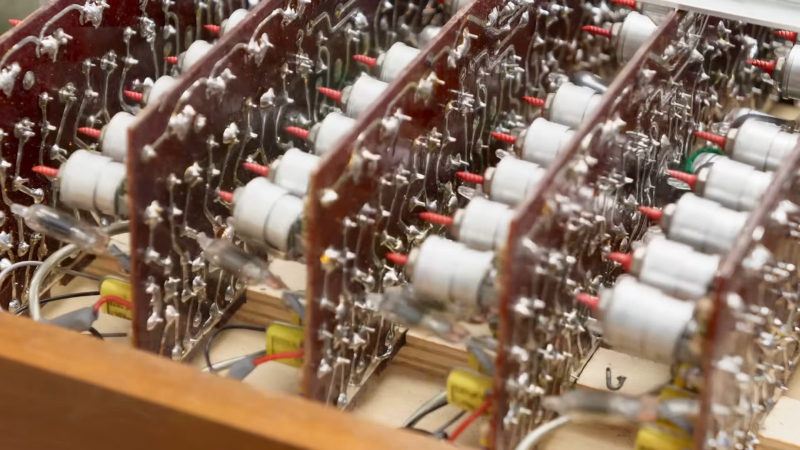
In the 1960s, synthesizers were typically characterized by extensive controls and patch cables, allowing for intricate configuration of filters, oscillators, and other parameters. These instruments were instrumental in shaping the sound of music during that era. However, one particular synthesizer from the 1960s stands out for its unconventional design, eschewing the common use of transistors. This unique instrument offered a different approach to sound synthesis, deviating from the technological norms of its time. Its distinctive architecture likely resulted in a sonic character and operational experience that differed significantly from its transistor-based contemporaries. The implications of this design choice on its sound production and user interface are a subject of interest for those studying the history of electronic music instruments. The instrument's rarity and unique construction make it a notable artifact in the evolution of synthesizer technology.
This unique synthesizer represents a fascinating divergence from the prevailing technological trajectory of the 1960s. While transistors were becoming the standard for electronic circuits due to their efficiency and miniaturization, this instrument's design suggests an exploration of alternative pathways in sound generation. Such deviations, though perhaps not commercially dominant, often reveal overlooked principles or unique sonic possibilities. Examining this organ's architecture can offer insights into the diverse innovation landscape of early electronic music, prompting reflection on how different technological choices impact creative output and the evolution of musical instruments. It highlights that innovation is not always linear and that non-standard approaches can yield distinct and valuable results.
AI-generated to prompt reflection — not editorial opinion, not advice, not a statement of fact. How this works.