The Paradox of Anti-Zionist Jews in the Boycott Debate
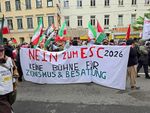
The article examines the complex discourse surrounding Jewish individuals who express anti-Zionist sentiments, particularly within the context of boycott debates. It highlights a perceived double standard where solidarity with Palestine by a Jewish person is often framed as ideological, while adherence to Israel is characterized as a matter of identity. This distinction, the author argues, reveals a significant imbalance in how such positions are understood and debated.
The piece suggests that this framing is problematic and indicative of a broader issue in public discourse. It implies that the narrative often fails to acknowledge the nuanced perspectives within the Jewish community regarding Zionism and the Israeli-Palestinian conflict. The author aims to offer a counter-argument to the prevailing narrative, suggesting that the categorization of Jewish stances is often oversimplified and politically charged. This perspective is presented as a critical reflection on the current state of the boycott debate and its implications for Jewish identity and political expression.
The framing of Jewish individuals' stances on Zionism as either 'ideology' or 'identity' reflects a broader societal tendency to essentialize or politicize minority group affiliations. This dichotomy can obscure the diverse and evolving viewpoints within any community, potentially limiting nuanced discussion. In the context of boycott debates, such categorizations may serve to either validate or delegitimize certain positions based on pre-existing political frameworks, rather than engaging with the substance of the arguments. Moving forward, fostering an environment that allows for the exploration of individual reasoning and diverse perspectives, irrespective of group affiliation, is crucial for productive dialogue on complex geopolitical issues.
AI-generated to prompt reflection — not editorial opinion, not advice, not a statement of fact. How this works.