The Rise of 'First' Politics: A Global Shift Towards Economic Nationalism
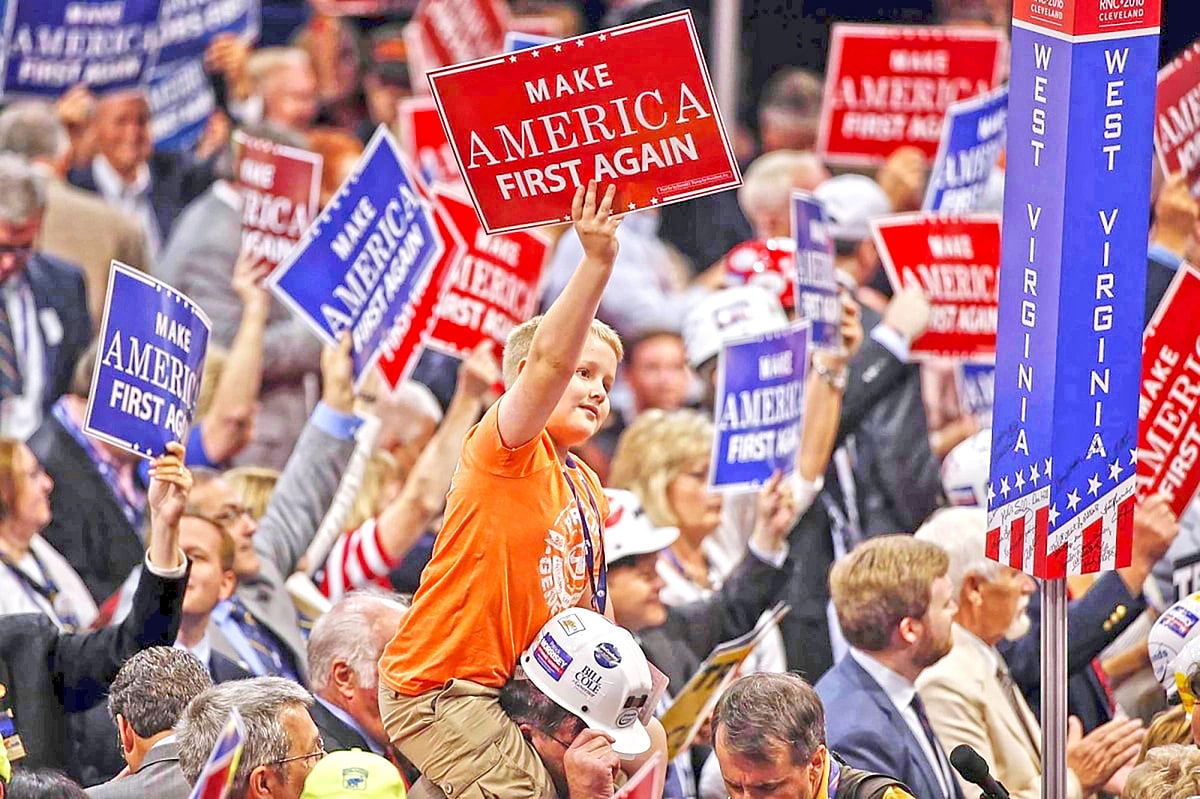
A significant shift in global politics over the past decade has seen nations, despite diverse ideologies and economic structures, adopting similar nationalistic rhetoric, epitomized by slogans like 'America First,' 'China First,' and 'India First.' While superficially appearing as a reaction against globalization, this trend is more nuanced. The underlying economic principles of protecting domestic industries, reducing imports, and state intervention are not new, but their presentation as a potent political tool, effective across democracies and authoritarian regimes alike, is a novel development.
In the United States, 'America First' emerged from the economic anxieties of deindustrialization, aiming to bring manufacturing back. However, the returning industries are increasingly automated, offering fewer jobs than before, suggesting a broader attempt to reshape a social reality with a fundamentally altered economic base. China, facing domestic demand weakness and housing sector issues, is reinvesting in production and exports, particularly in electric vehicles and solar technology, to offset internal challenges. Yet, this export-driven growth faces geopolitical headwinds as other nations increasingly protect their own markets.
India's 'Make in India' initiative revives import substitution industrialization, a strategy previously employed by many post-colonial nations. While some achieved success, others saw protected industries become politically entrenched, prioritizing protection over efficiency. Despite differing policies and political systems, these major economies converge on the belief that strengthening national power requires increased state control over production, reduced foreign dependency, and a broader government role in the economy. This is no longer just economic policy but a political identity, a universal language of 'First' that signals a state's commitment to prioritizing national interests over external ones and reclaiming control in an era of globalization.
The global adoption of 'First' political rhetoric signals a systemic shift driven by the perceived failures of prolonged globalization and the increasing weaponization of economic interdependence. This trend reflects a rational response to geopolitical instability, supply chain vulnerabilities exposed by events like the COVID-19 pandemic and regional conflicts, and the strategic competition between major powers. Nations are recalibrating priorities from pure economic efficiency towards resilience and national security, leading to policies that favor domestic production and reduce foreign dependencies. However, this pivot towards state-centric economic nationalism carries inherent risks. Concentrating economic power within the state can foster rent-seeking behavior and lobbying, potentially distorting industrial policy away from genuine development towards managing relationships between government and influential business groups. The challenge lies in balancing the legitimate need for national security and economic resilience with the principles of open markets and fair competition, ensuring that state intervention genuinely strengthens the nation without creating new forms of cronyism or stifling innovation.
AI-generated to prompt reflection — not editorial opinion, not advice, not a statement of fact. How this works.