The Secret to the Climbing Perch's Survival Out of Water
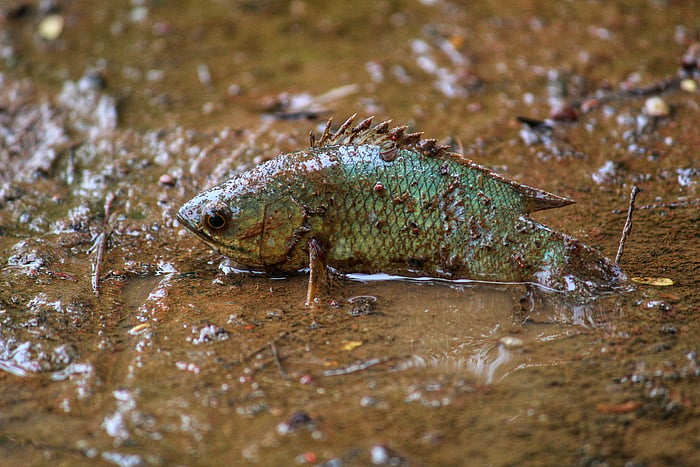
The climbing perch, or Koi fish, possesses a remarkable ability to survive out of water for extended periods, a trait that often surprises consumers who find the fish still alive hours after purchase. This resilience is attributed to a unique biological adaptation not found in most other fish species. Unlike common fish, which rely solely on gills to extract dissolved oxygen from water, the climbing perch has an auxiliary respiratory organ.
This specialized organ, known as the labyrinth organ, is located on either side of the fish's head, just above the gills. It is a complex, folded structure rich in blood vessels, functioning much like a primitive lung. When the climbing perch is out of water or in oxygen-depleted aquatic environments, it can gulp air directly from its mouth. This air travels to the labyrinth organ, where oxygen is absorbed into the bloodstream and distributed throughout the body.
However, this organ requires moisture to function. If the fish's skin dries out completely, the labyrinth organ becomes ineffective. This explains why climbing perch thrive in muddy, damp environments and can survive in wet sacks or on moist surfaces. Furthermore, climbing perch exhibit an astonishing ability to traverse land, using their pectoral fins and gill covers to 'walk' or wriggle across the ground, especially during dry seasons, to find new bodies of water.
The climbing perch's survival mechanism highlights a fascinating evolutionary adaptation to fluctuating aquatic environments. This biological advantage allows the species to exploit niches unavailable to fish solely dependent on submerged respiration. From a systems perspective, this trait provides a competitive edge, enabling migration and survival during droughts, thereby ensuring population resilience. Understanding such adaptations can inform ecological conservation strategies, particularly in regions facing water scarcity due to climate change. It also presents a biological model for studying amphibious respiration and the potential for bio-inspired engineering solutions for oxygen transport in challenging conditions.
AI-generated to prompt reflection — not editorial opinion, not advice, not a statement of fact. How this works.