The Significance of the White Part of the Human Eye in Communication
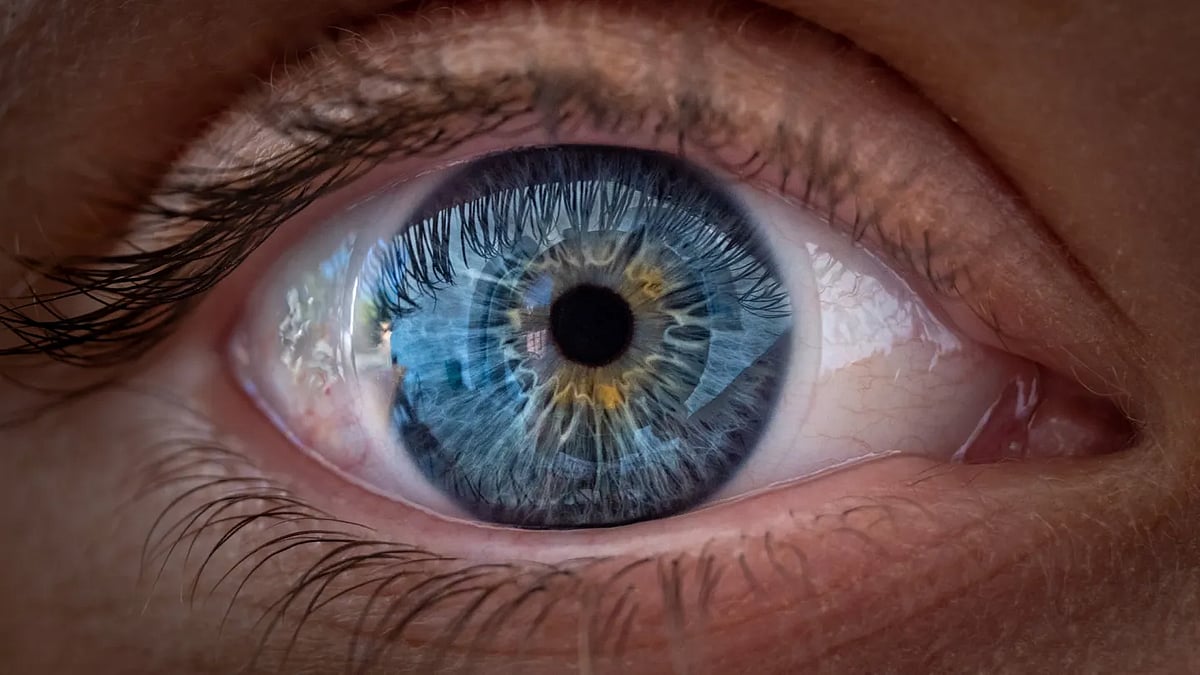
The white sclera of the human eye, often overlooked, plays a crucial role in interpersonal communication and understanding gaze direction. Unlike many other mammals, humans have a significantly more visible white sclera, creating a stark contrast with the iris and pupil. This contrast makes it easier to discern where a person is looking, facilitating quick social interactions and shared attention.
Researchers like Shiro Koshima of Kyoto University observed this phenomenon in primates, hypothesizing that the prominent white sclera aids in indicating gaze. Further studies, including experiments with human infants, gorillas, and chimpanzees led by Michael Tomasello at Duke University, supported this idea. Infants demonstrated a strong tendency to follow gaze indicated by eye direction, while gorillas and chimpanzees relied more on head movements. This ability to follow gaze develops early in infants, becoming a regular behavior by eight months of age.
The visible sclera is also vital for language acquisition, allowing infants to connect spoken words with objects by following the speaker's gaze. While the white color itself is important, researchers like Juan Pereyra-García from the University of Las Palmas de Gran Canaria note that the contrast between the sclera and iris is key, as scleral pigmentation can vary among populations. Modifications to chimpanzee eyes to increase scleral whiteness also improved gaze perception. Beyond communication, the sclera's appearance can offer health insights, with yellowing potentially indicating jaundice and redness suggesting infection. A clear, bright sclera is also associated with perceptions of health and youth.
The human eye's white sclera, a seemingly simple biological feature, functions as a sophisticated communication tool, enabling rapid, non-verbal cues about attention and intention. This evolutionary advantage, particularly pronounced in humans compared to other primates, underscores the deep biological roots of social cognition and cooperative behavior. The development and reliance on gaze following from infancy highlight the critical role of such visual cues in language acquisition and social learning, suggesting that our capacity for complex communication is intrinsically linked to these visual mechanisms. The varying health indicators observable in the sclera also present a fascinating intersection of biology and social perception, where physiological states can influence how individuals are perceived by others. Understanding these subtle biological mechanisms can offer insights into the foundational elements of human social interaction and the potential impact of visual impairments or altered visual cues in future human-AI interactions.
AI-generated to prompt reflection — not editorial opinion, not advice, not a statement of fact. How this works.
