The Sociology of Self-Immolation
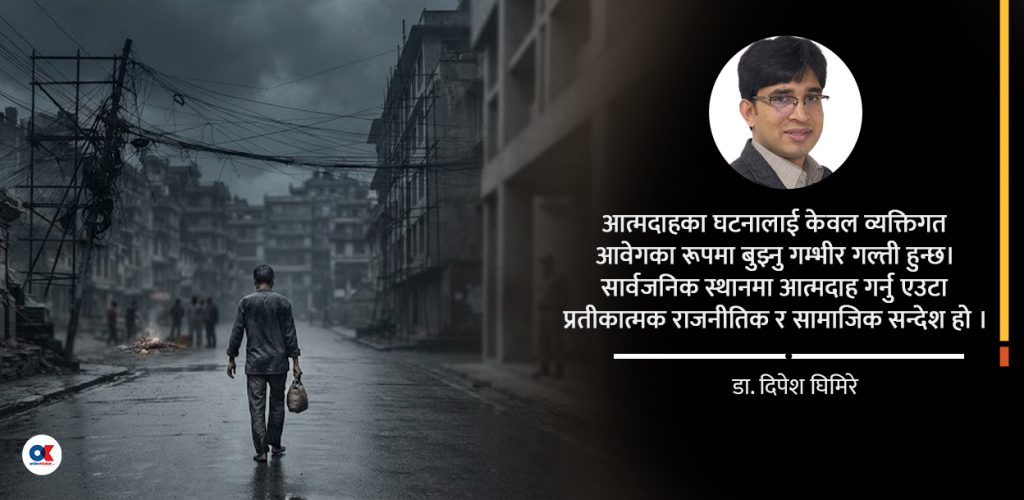
Viewing self-immolation solely as a product of an individual's mental health is a dangerous perspective. Presenting such incidents as political thrill or an ideal of resistance is also inappropriate. This approach fails to acknowledge the complex societal factors that can contribute to such extreme acts. It is crucial to understand that these events often stem from a confluence of socio-economic pressures, political grievances, and a sense of profound despair. Reducing self-immolation to individual pathology or political symbolism oversimplifies a deeply troubling phenomenon. A more comprehensive sociological analysis is needed to grasp the underlying causes and prevent future tragedies. Such an analysis would explore the broader societal conditions that might drive individuals to such desperate measures. It requires looking beyond individual psychology to examine systemic issues.
Self-immolation is a complex phenomenon that resists simplistic categorization as purely a mental health issue or a political statement. A sociological lens reveals that such acts often emerge from a confluence of systemic failures, including political disenfranchisement, severe economic hardship, and a lack of viable recourse for grievances. Framing these events as mere acts of individual pathology or political theater risks overlooking the societal conditions that create desperation. Understanding the underlying incentive structures and governance failures that contribute to such extreme acts is crucial for developing effective prevention strategies. Focusing on societal resilience and providing avenues for meaningful participation and redress could mitigate the conditions that lead to such tragic outcomes.
AI-generated to prompt reflection — not editorial opinion, not advice, not a statement of fact. How this works.