The Two Cultures of Artificial Intelligence and Mathematics
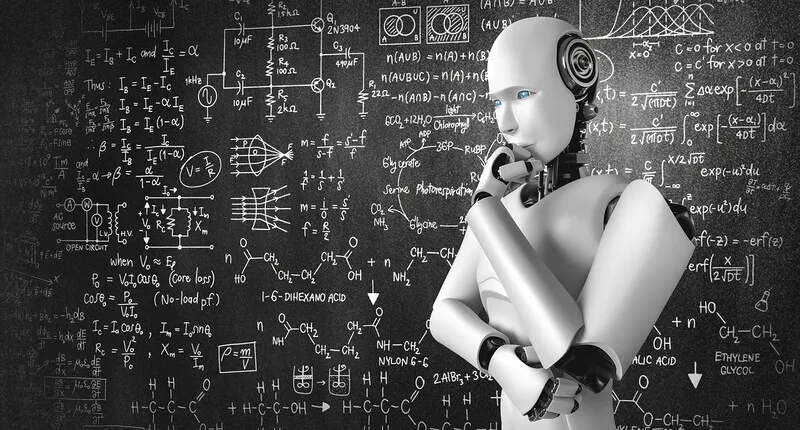
This piece, part of the "Yeodam" series by Kim Min-hyung, explores the distinct yet interconnected "cultures" of artificial intelligence (AI) and mathematics.
Kim Min-hyung, a professor at the Korea Institute for Advanced Study (KIAS), delves into the fundamental differences in how AI researchers and mathematicians approach problems and conceptualize their fields. While both disciplines rely on logic and rigorous thinking, their methodologies, goals, and even the nature of their "truth" often diverge. AI, being a more applied and rapidly evolving field, often prioritizes practical outcomes and empirical validation. In contrast, mathematics is characterized by its abstract nature, formal proofs, and a pursuit of universal, timeless truths.
The author suggests that understanding these cultural differences is crucial for fostering more productive collaboration and innovation between the two fields. Bridging the gap could lead to significant advancements, as AI could benefit from the foundational rigor of mathematics, and mathematics might find new avenues of exploration through the computational power and problem-solving capabilities of AI. The essay serves as a reflection on the unique perspectives each domain brings and the potential synergies that arise from their interaction.
The intersection of artificial intelligence and mathematics presents a fascinating case study in the evolution of scientific disciplines. AI's empirical, results-driven approach often contrasts with mathematics' axiomatic, proof-based methodology. This divergence reflects broader trends in knowledge creation, where applied sciences prioritize immediate utility and scalability, while theoretical sciences focus on foundational understanding and abstract generalization. The challenge lies in harmonizing these distinct "cultures" to foster cross-pollination of ideas. Future advancements may depend on developing frameworks that can translate between empirical observations and formal proofs, enabling AI to leverage mathematical rigor for greater reliability and mathematics to explore new frontiers through computational experimentation. This dynamic highlights the ongoing tension between practical application and theoretical depth in scientific progress.
AI-generated to prompt reflection — not editorial opinion, not advice, not a statement of fact. How this works.