Thermal Camera Boost Could Double LIGO's Gravitational Wave Detection Range
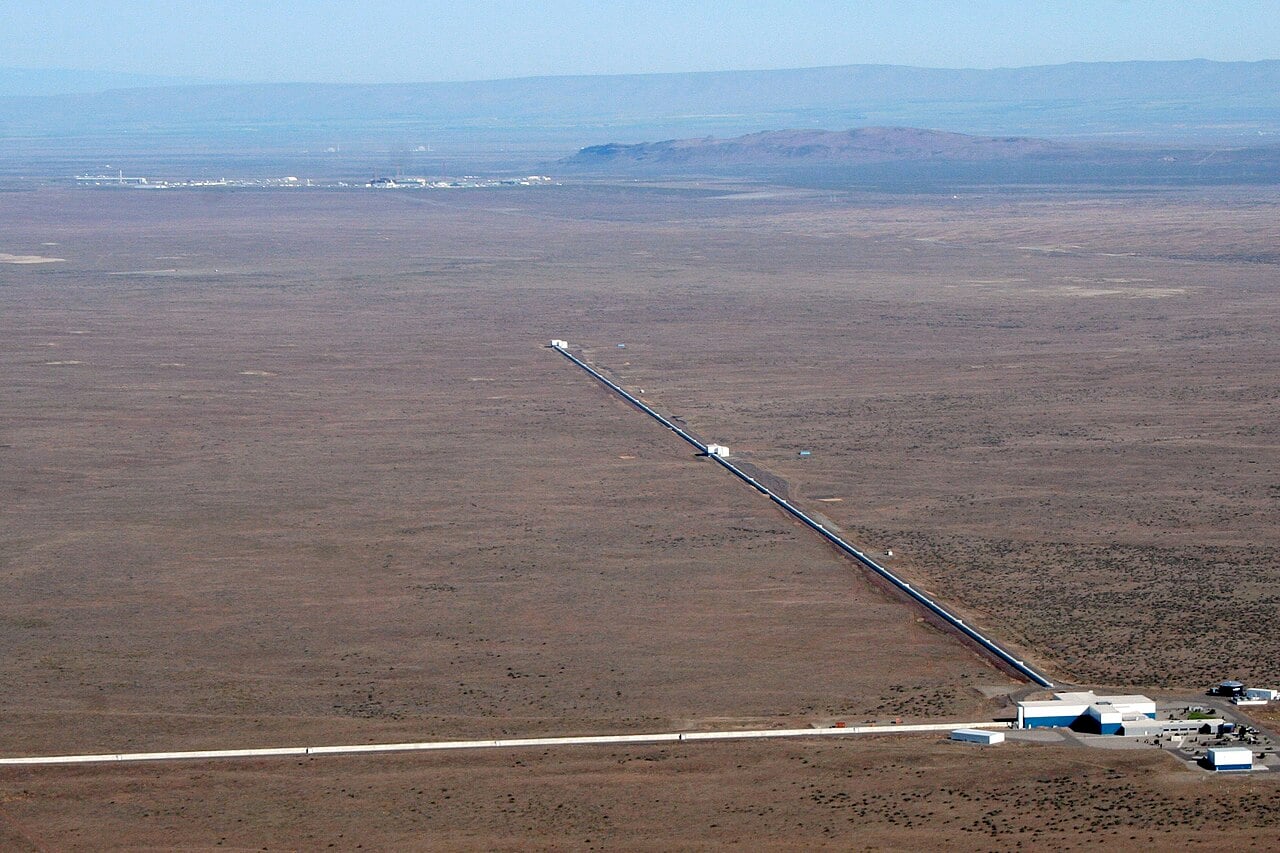
Researchers have devised a straightforward method to enhance the sensitivity of gravitational wave detectors, such as LIGO. The technique involves directing a standard thermal imaging camera towards the detector's mirrors. This innovation has the potential to increase LIGO's sensitivity by as much as 31% in its next upgrade. Such an improvement would enable the detection of neutron star collisions from distances tens of millions of light-years greater than currently possible. Furthermore, this thermal imaging approach is already being incorporated into the design of the Cosmic Explorer, LIGO's planned successor. The implications for astrophysics are significant, potentially opening new windows into the universe's most energetic events.
This development highlights how incremental technological advancements can significantly amplify the observational reach of large-scale scientific instruments. By leveraging readily available thermal imaging technology, researchers are addressing a fundamental challenge in gravitational wave astronomy: increasing sensitivity to detect fainter and more distant cosmic events. This approach, if successfully implemented, could offer a cost-effective means of extending the scientific return of existing and future observatories. It underscores the importance of interdisciplinary innovation, where solutions from one field can unlock new capabilities in another. The potential to observe events tens of millions of light-years farther away suggests a paradigm shift in our ability to probe the universe's history and composition, particularly concerning extreme astrophysical phenomena like neutron star mergers.
AI-generated to prompt reflection — not editorial opinion, not advice, not a statement of fact. How this works.