Thief Makes Sign of the Cross After Stealing Statue from Chapel in São Paulo Coast
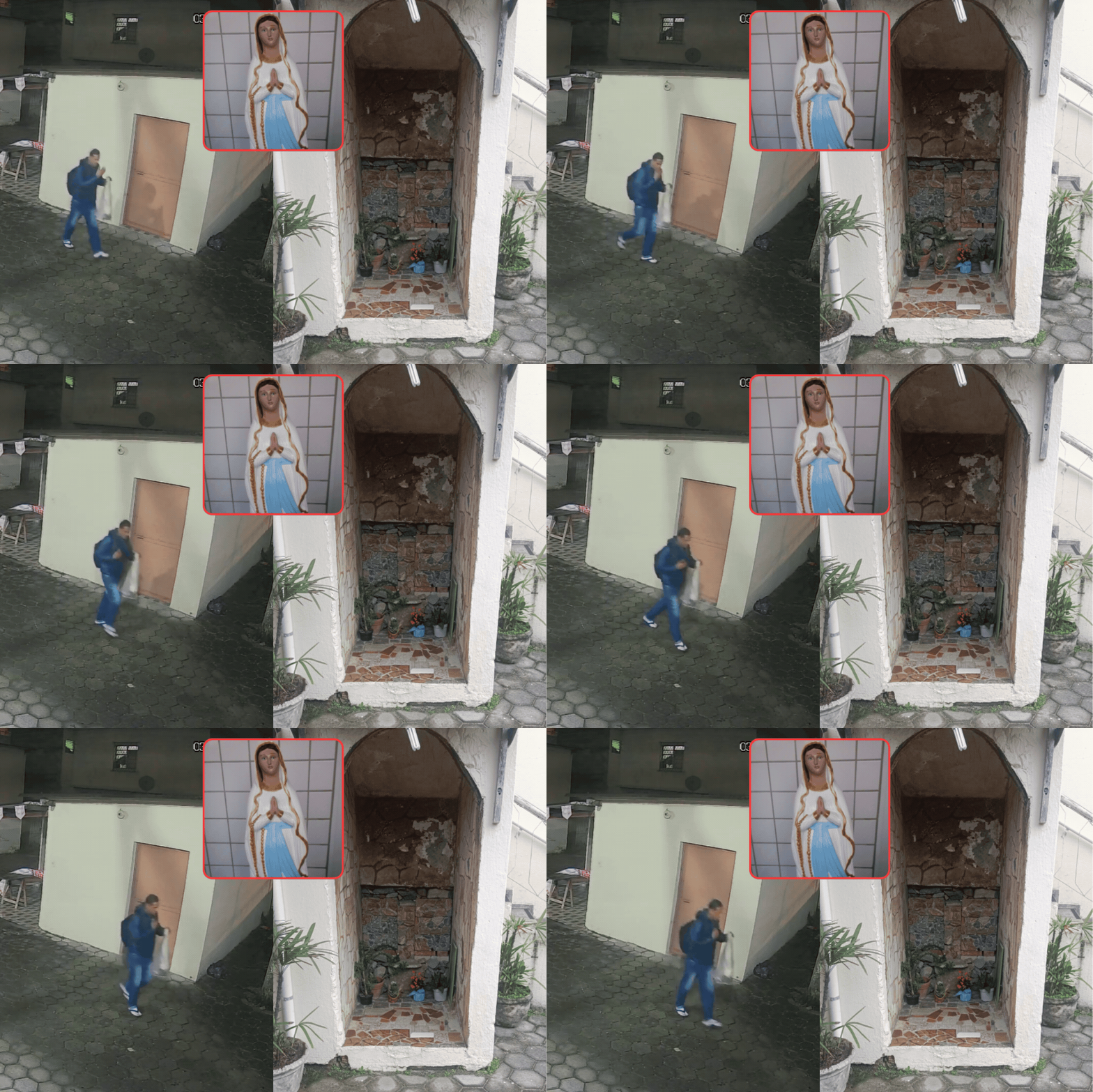
A man stole an image of Our Lady of Lourdes from a chapel in Praia Grande, on the coast of São Paulo, Brazil, and was captured on surveillance video making the sign of the cross as he fled. The incident occurred on the night of Friday, March 3rd, when the suspect entered the Espírito Santo e Mãe de Deus chapel, located in the Aviação neighborhood. The image, which was housed in a grotto in the chapel's courtyard, was noticed missing by parishioners the following day. Rubens Prado Junior, coordinator of the chapel and a merchant, reviewed the security footage, which revealed the suspect's unusual behavior. Prado described the event as "curious, I don't know how to interpret it. It would be comical if it weren't tragic." He also noted that the man appeared to pray before taking the statue and made the sign of the cross near the exit gate. A police report for theft was filed on Monday, March 6th, at the 1st Police District of Praia Grande. The chapel community is hopeful for the image's return due to the case's publicity, emphasizing its significant religious and sentimental value, as it had been in the chapel for many years. The São Paulo State Public Security Secretariat confirmed that the Civil Police are investigating the theft to identify the perpetrator and recover the stolen object.
The theft of a religious artifact, coupled with the perpetrator's seemingly contradictory gesture of making the sign of the cross, presents a complex human behavior scenario. This event highlights the intersection of religious symbolism and criminal intent, prompting reflection on individual motivations and the psychological impact of faith, or its performance, in moments of transgression. From a systemic perspective, the incident underscores the vulnerability of cultural and religious heritage sites and the ongoing need for robust security measures, even in seemingly peaceful community spaces. The public reaction and police investigation indicate a societal value placed on such artifacts, suggesting that their recovery is seen as restoring not just property, but a piece of collective identity and spiritual continuity. Future considerations might involve exploring how technology can aid in both prevention and recovery, while also acknowledging the deeply personal and often inscrutable motivations behind such acts.
AI-generated to prompt reflection — not editorial opinion, not advice, not a statement of fact. How this works.